



From a toy melodica in Ras Baalbek to producing chart-topping records in a Beirut apartment, Jean-Marie Riachi’s path into music was anything but conventional. He built his career across studios, stages and even restaurants — often during some of Lebanon’s most difficult years — and never left. We sat down with the musician, arranger, producer and restaurateur to hear how it all came together.
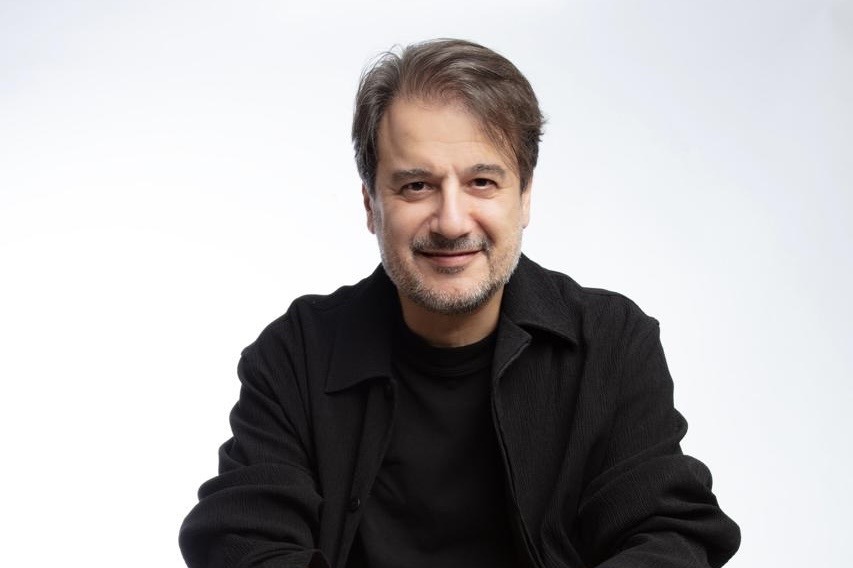
You grew up in Ras Baalbek. What are your earliest memories of music?
I discovered my talent at eight years old. I was at my grandparents’ house on Christmas Eve, and my cousin had received one of those small melodicas as a gift. She was playing with it like a toy. I took it and played “Limelight” by Charlie Chaplin with one finger. My dad used to play that record to me when I was a baby to help me sleep, so I had it in my head without even knowing it. Once I found the instrument, it just came out.
My parents realized something was there and got me a proper instrument. But in a village like Ras Baalbek, there was no music school, so it was all by ear. My father listened to classical music, my mother is from Aleppo, and she listened to tarab — Oum Kulthoum, Sabah Fakhri. I grew up in both cultures.
Your family wasn’t musical at all?
Not at all. There was not even a single musical instrument in the house. My parents wanted me to be an engineer.
Then, one day, a friend encouraged me to go on the TV show “Studio El Fan” — it was a small dream, nothing more. I went, I participated, I won. Later, Simon Asmar told me: “Jean-Marie, you have the talent, you should study music. But change your name — you’re in the Middle East, Jean-Marie is very French. Put an Arabic name.” I refused, because I wanted to be myself in the music industry. I kept my name and went to study music at USEK.
When and how did your music career really take off?
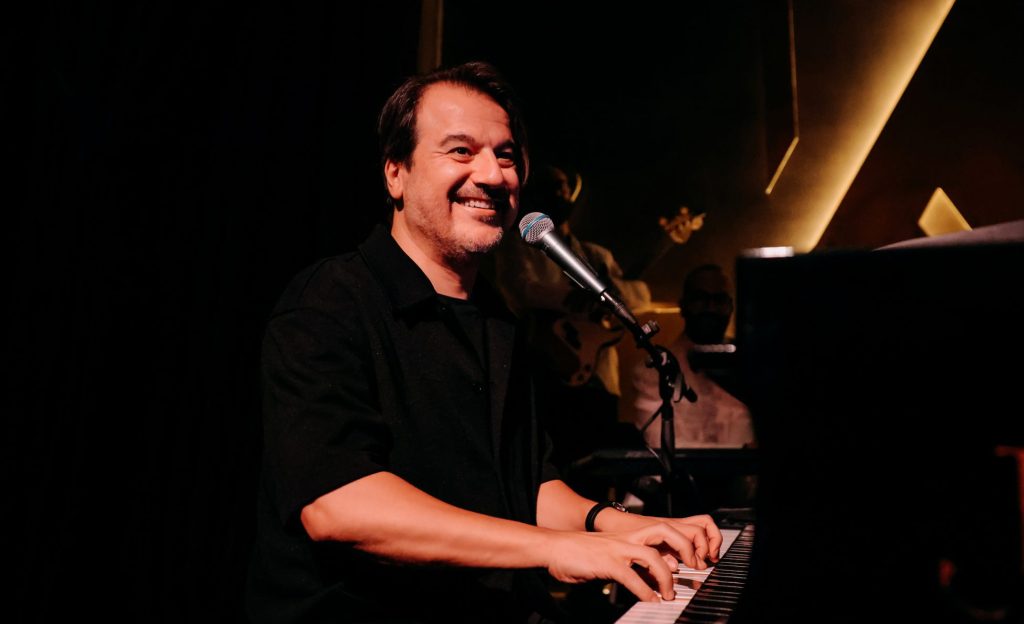
In 1996, I thought I should have my own place. The restaurant was always my music laboratory. When you play in front of people of all ages, all cultures, people who’ve had a drink, people who haven’t — you learn which formula works for which crowd. That education is priceless. I opened Velvet in Kaslik. It drew in quite a crowd as there was a one-man show.
Back then, there was a hit Greek song called “Magapay.” I didn’t love the sound, so I did my own remix in my bedroom studio — just for myself. One night, a man sitting in the crowd asked to speak to me. He turned out to be the director of EMI Middle East and was shocked when he found out I had done the remix. He told me that I should go into music production, and that was the beginning. He asked me to introduce new artists. I knew Elissar Khoury — now Elissa — who was a guest performer at the venue. We introduced her to producer Jean Saliba, and they asked me to do two or three tracks alongside the main composer. My song, “Baddy Doub,” was the mega hit in the album.
We then went to Midem in Cannes. It was my first time in France — I couldn’t afford to travel before that. Suddenly, I’m there presenting our new sound, the same night as Cher and Faudel. After the success, many artists reached out — Latifa, Walid Tawfik. But I still didn’t have a studio. Big names were coming to my apartment in Beirut, my mother cooking food for them. Hit after hit, all produced in a bedroom!
At which point did you feel you’d really made it?
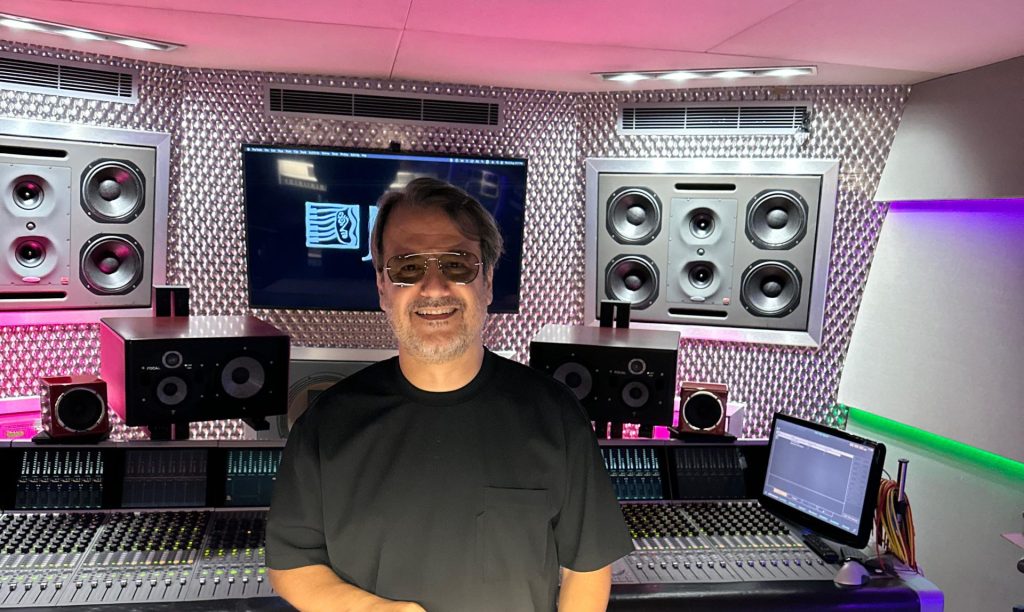
It was when I did the “Ayshalak” album for Elissa. I received an invitation from Al-Ahram newspaper in Egypt, which prints over a million copies a day. I went there and was shocked by how many musicians wanted to meet me, asking how I did the sound, what mixer I used. That album changed Elissa’s life and mine.
You’ve worked with an extraordinary range of artists — Majida El Roumi, Elissa, Rami Ayach, Haifa Wehbe, even José Carreras. How do you approach each one differently?
I’m the makeup artist, the director, the person behind the scenes — not the front. My job is to make the artist look good and sound good. The clientele that listens to Majida El Roumi is completely different from Haifa Wehbe. Even when I worked with Fairuz, on a religious project, it was something else entirely. Every artist should have their own identity. One formula doesn’t work on everyone.
And the sound should never feel old — it should feel good. I’m proud that when I listen to the “Ayshalak” album now, recorded in 2002, people think it was produced two months ago. That’s because it was organic.
You’ve been music director of the Joy Awards in Riyadh for several years now. What does that mean to you?
It started as a vision to create something akin to the Grammy Awards for the Arab world. The first year was modest. But the ambition grew. Last season, after the Joy Awards, I watched the Grammys, and I was genuinely proud of what we had done. We had Robbie Williams, Katy Perry, Hans Zimmer, Michael Bublé. We don’t just sign artists and let them perform with their own bands. We create something new for each one. We bring our culture into it. A hundred musicians, a symphonic orchestra from Budapest, oriental soloists. The sound is massive.
Robbie Williams, by the way, is super cool. He was suggesting things, trying ideas. When you build that kind of trust, other artists want to come. Now they’re asking to be on the lineup. That’s when you know you’ve done something.
What about your restaurants?
As I said earlier, the restaurant environment is where I experiment. It’s where I play new music and watch how people react. I take energy from the people who come in. And I love receiving people.
But honestly, I entered the restaurant business because I saw musicians I admired struggling financially when they got older. If your only income is your talent, what happens when the talent slows down? I needed a parallel source. And the same principles apply — when you do something new and people enjoy it, it travels.
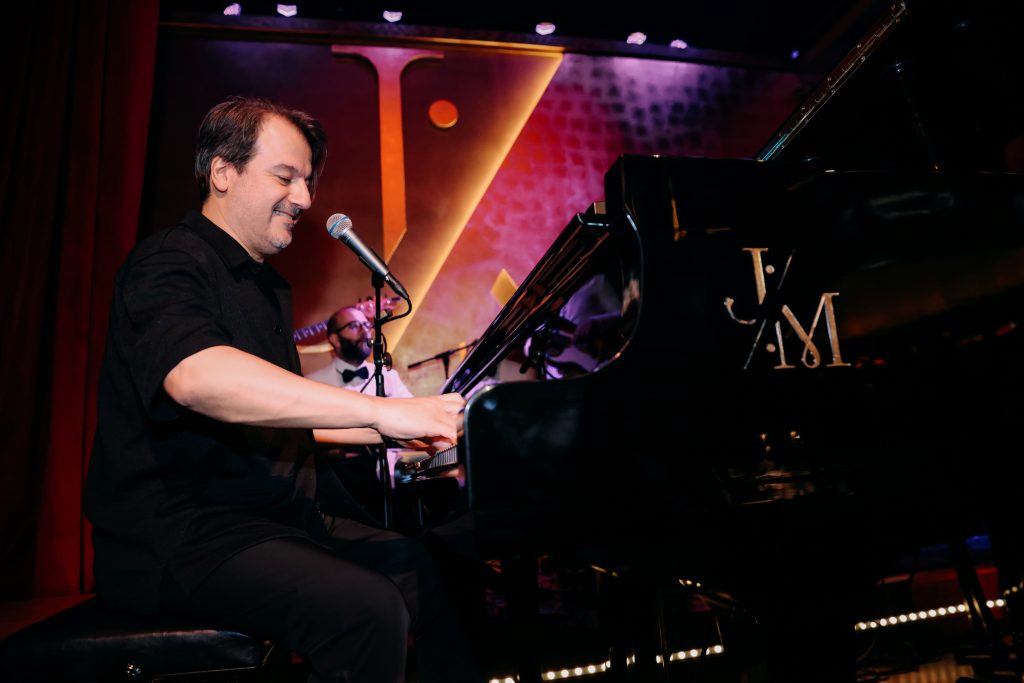
In 1999, after the success of Velvet, I collaborated with Eddy Doumit, and we opened the Al Mandaloun in Sodeco and then Al Mandaloun Sur Mer. Then came Le Particulier, Loris, Maallem Arteen, Café D’Orient and French Canteen. In 2025, I opened JM Dîner-Concert, a new concept that continues to push the boundaries of what a dining experience can be.
Despite the constant challenges of operating restaurants, I am proud of how we are constantly adapting and diversifying. For example, Loris has grown beyond Lebanon, with branches in Saudi Arabia, Qatar and Egypt. We’re working on opening in Selfridges in London, which will be a massive step and one we are excited about.
How would you describe your feelings toward Lebanon?
I love Lebanon; this is my home and always will be. I love the vibes and feel that I belong here. Even during the tough times, I want to be here and want to raise my kids here. I don’t feel as though I am working in Lebanon, rather I am creating. It gives me energy. The society, friendships, the way of life… No one can compete with Lebanon.
What’s coming up musically?
I’m working with many new artists. That’s what keeps me feeling young. I also believe that a song can carry more than one voice — the collaboration between artists is something I want to explore more. And always, the message matters. Sometimes you need to make people happy. But sometimes, you need to put your finger on the wound.
If you enjoyed reading this, check out our interview with Lebanese-Armenian pianist and composer Guy Manoukian.
Loading