



On the morning of 7 May 2026, a group of primary school students in Batroun will pick up brushes and paint a mural on the walls of their city. They won’t be watching an artist work or visiting a finished piece in a gallery. They will be making it themselves — contributing to a permanent public artwork that will outlast the school year, the news cycle and perhaps much else besides. Urban Blooms, a participatory cultural initiative launched by BeyArt and the Beirut Museum of Art (BeMA), takes art out of institutions and puts it where people actually live. We learn more about what’s planned for the inaugural edition.
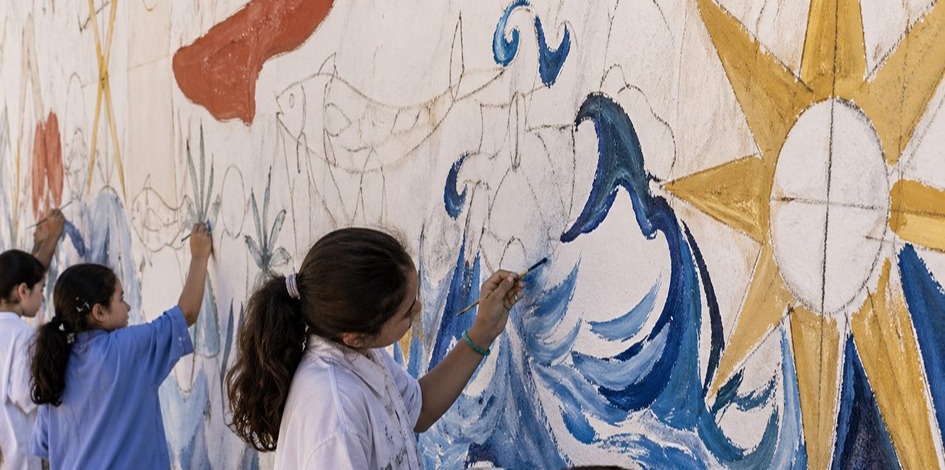
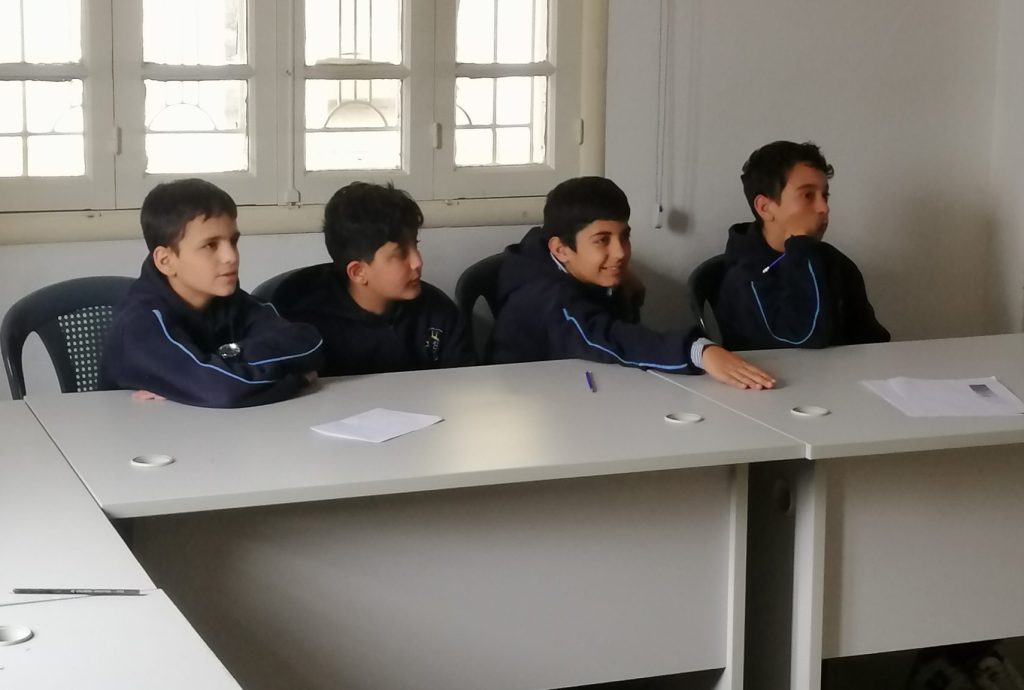
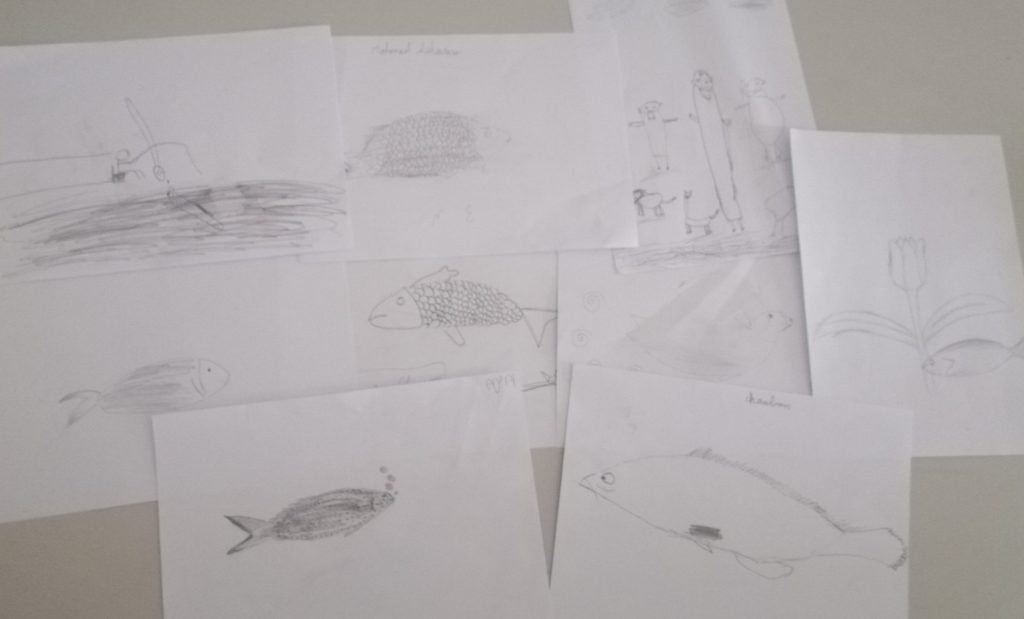
Batroun, an ancient coastal city with a storied past, provides the perfect backdrop for the inaugural edition of Urban Blooms. At the core of this opening chapter are students from Batroun Elementary Public School. Through a structured program bridging art history, technique and collective practice, they are introduced to the language of mural and street art — and then given the chance to speak it themselves. Their work moves from the classroom into the city, culminating in a permanent intervention within their school and direct participation in the mural now taking shape on Batroun’s walls.
The timing carries weight. Public schools across Lebanon have faced intermittent closures and repurposing as emergency shelters amid continued turmoil. Amid this landscape, BeMA’s Learning Department has maintained its commitment to arts education — insisting that creative expression and cultural access should not be among the casualties of crisis. This is not supplementary programming. It is an act of insistence: that children’s engagement with art, heritage and their own cities is not a luxury but a necessity.
Rayane Raidi, programs manager at BeMA, says: “What makes this project so meaningful for BeMA is seeing students move from the classroom into the city, working together, expressing themselves through art and leaving their own mark on a public wall. For children in public schools today, this is more than an artistic activity; it is an opportunity to build confidence, connection and belonging through a shared creative experience.”
Mare Nostrum: Memory as Form
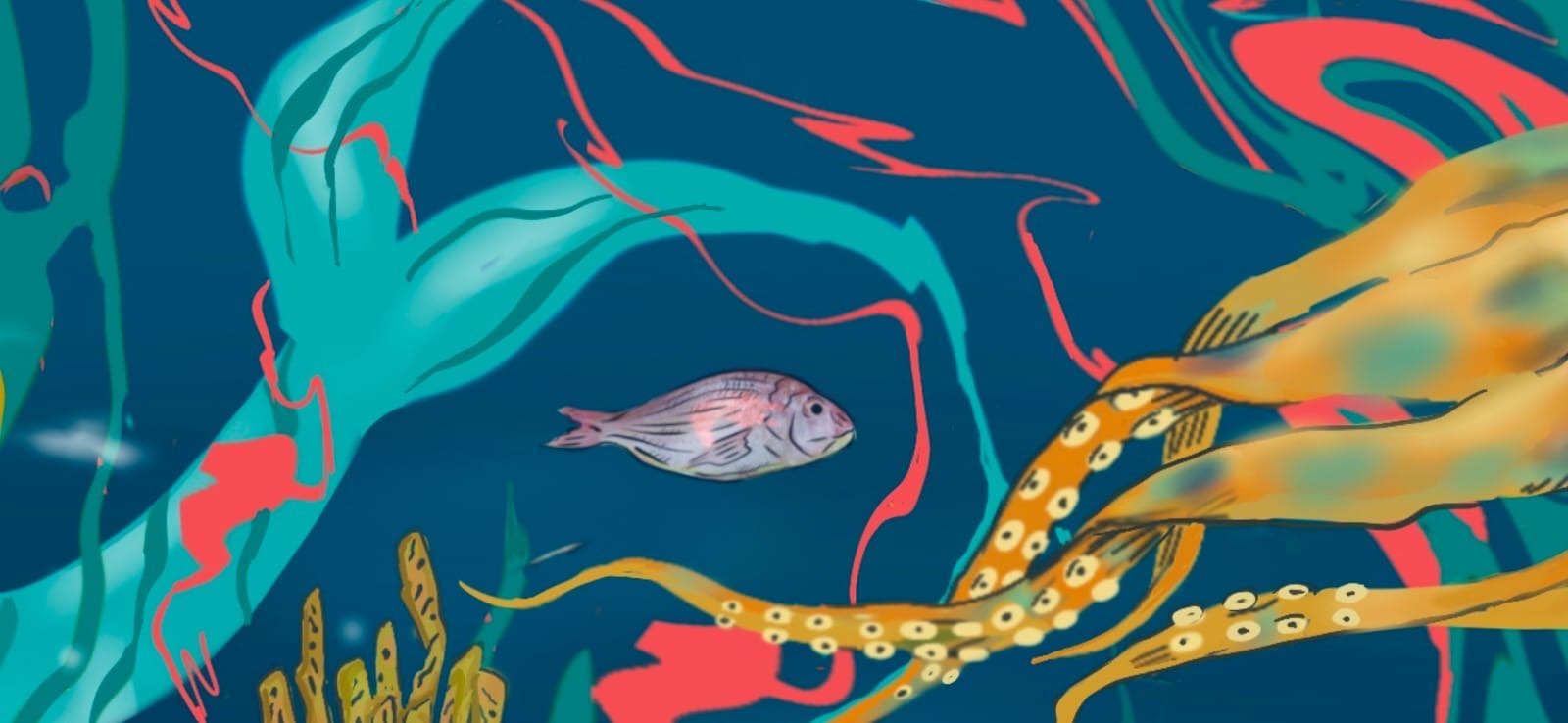
The mural itself is the work of artist Marie Joe Ayoub. Titled “Mare Nostrum — Our Sea” — it is realized at Chez Maguy in Batroun, and draws from the city’s deep, generational relationship with the Mediterranean. Ayoub translates this into a contemporary visual language: forms of movement, of water, of maritime life rendered in the idiom of the street rather than the museum.
The title is deliberate. “Mare Nostrum” — the name Roman sailors gave to the Mediterranean — speaks to a sea that has never belonged to any single people, yet has shaped all who have lived beside it. In Batroun, where Phoenician sea walls still stand and fishing boats still depart at dawn, this memory is not distant. Ayoub brings it forward, makes it visible, fixes it to a wall where children walk past every day. “Participating in the Urban Blooms street art project is an act of resistance. With the strength of our creativity, talent and culture, we stand against the violence of occupation, war and the forced migration taking place in our country. Nothing will stop us from dreaming and creating,” she says, defiantly.
Transmission as Practice
What distinguishes “Urban Blooms” from a typical public art commission is the insistence on transmission — the passage of knowledge, sensibility and creative practice from artist to community, from older forms of heritage to younger hands. BeMA’s Learning Department, which leads the arts education component through its “Creative Pathways” program, frames this exchange as the connective tissue between classrooms, exhibitions and the streets beyond both.
The result is a shift in how art enters a life. Rather than encountering it as something finished and authoritative — something to be looked at in silence — participants encounter art as something in the making, something that requires them. Students don’t just learn about murals; they produce one.
“We are so proud to be partnering with BeyArt to bring to life a beautiful work of art that inhabits BeMA’s spirit of collaboration, but more importantly a message of positivity despite the country’s current circumstances. We also hope that this acts as a springboard for future collaborations and inspires more artist and student-led and initiatives,” says Taline Boladian, co-director of BeMA.
Batroun is Only the Beginning
BeyArt, a curatorial platform focused on activating public space through contemporary artistic interventions, engaging artists, communities and sites in processes that embed art within everyday life, has framed this Batroun chapter as the first in a series of interventions across Lebanon’s varied cultural and geographic landscapes. Each edition will engage a different community, a different site, a different set of histories — contributing, collectively, to a broader narrative about what Lebanese public space can hold and carry.
“I believe art is powerful and has an important role in todays world especially in Lebanon. A lot to be done in that field especially with the new generation and for them. The sense of community we build is crucial on our work as BeyArt. Urban Blooms is community centered and wishes to preserve the beautiful stories and heritage of Batroun through the talent of selected Lebanese mural artists,” explains Ranine El Homsi, founder of BeyArt.
Indeed, in a country where so much of the cultural infrastructure has been strained, Urban Blooms offers a different model: not the grand institution waiting to be rebuilt, but the living practice of art in everyday places. A wall in Batroun. A school corridor. A mural the children helped paint. These are small in scale. They are not small in meaning.
The mural will be unveiled on Friday 8 May at 6pm, Chez Maguy, Batroun.
Loading