


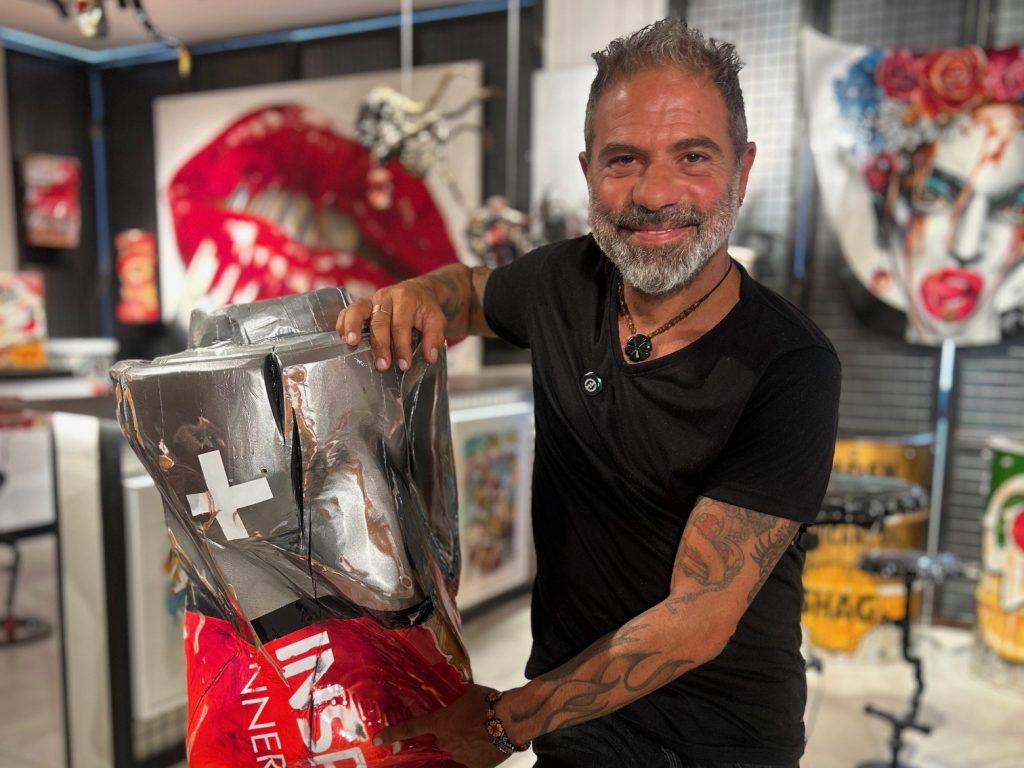
Art is in Hady Beydoun’s blood — and under his skin and all over his walls. Lebanon’s most iconic tattoo artist is also a sculptor, painter, poet, musician and self-taught everything, a one-man creative force who has been operating entirely on his own terms since he picked up a brush as a teenager. We sat down with him at his colorful Antelias showroom to talk about how it all started, tattooing royalty and what he’s building next.
Take me back to the beginning. How did all of this start?
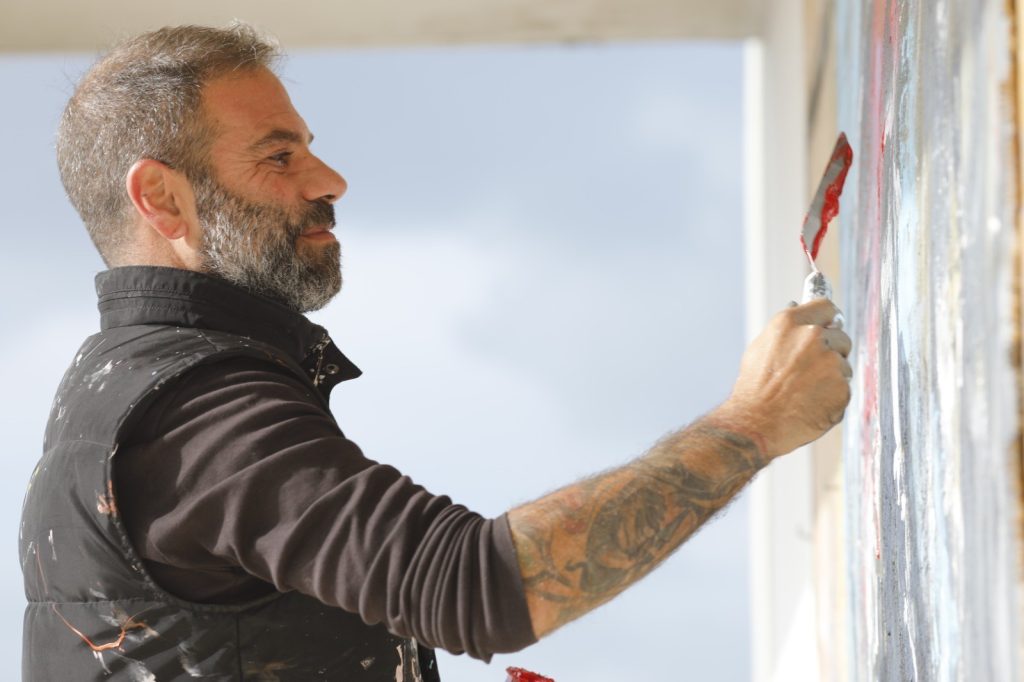
I was still in school, around 14 or 15. I decided I wanted to be different, so I started painting on T-shirts. No internet, nothing — just observing and copying album covers. That’s how I learned how to paint. Three years in, I got exposed to a tattoo magazine. Given my nature — wanting to shock, wanting to rebel — I felt that if painting aggressive ideas on T-shirts was rebellious, tattooing was on another level entirely. It’s frowned upon by society. And then I discovered my dad was against it, which made me want it even more. So I did my research, went to London, came back with my equipment, and started. I never forgot the painting side, though. Tattooing is one form of expression, but art stays forever. Tattoos die with the person.
Was there any formal training or was it mostly self-taught?
I started tattooing in 1995. I did study graphic design at university, so I had computer skills as a base — but everything beyond that I developed on my own. Endless nights on Photoshop, digging into Illustrator. I put everything into tattooing. I would work 12, 18 hours a day, sometimes until 7 am. However, I always found time to develop the painting side too. I taught myself airbrushing. One direction is never enough — art blooms in all kinds of ways.
Before social media, how did people find you?
Mostly word of mouth. But in 2000, I had an idea. I’d read that the best way to enter people’s minds is through printed material — and because I’m a graphic designer, I decided to create a newsletter. I designed it myself: pictures of my tattoo work, my paintings, sculptures. Then I would stand at the gates of AUB, NDU, LAU and hand them out to anyone who seemed interested — students, professors, janitors, everyone. I printed 5,000 copies at first, then 10,000. Later I started distributing through LibanPost, using a database of every client who’d ever walked through my door. Once, at a tattoo convention in the United Kingdom, a stranger pulled my newsletter out of his backpack. That told me everything I needed to know about the power of print.
Do you believe you changed the perception of tattoos?
I certainly changed the conversation in Lebanon. By presenting tattooing with history, mythology, meaning, technique — by writing about it beautifully — I challenged attitudes toward the art form. In the 1990s, tattooing was still very much seen as belonging to outcasts. It was taboo. University professors would take the newsletter into class and discuss it. One told his students: this is successful marketing. But for me it was more than marketing. It was a mission.
TV, magazines, royalty — it snowballed. You even tattooed King Abdullah of Jordan. What can you tell us about that?
Yes, I tattooed him twice. He has the Jordanian flag on his arm. That was 2008. Saudi princesses, singers, celebrities — people from all walks of life came to me. But none of that happened because of social media. It happened because of the whole combination: the work, the newsletter, the TV appearances, the way I carried myself and communicated. I was approached by almost every TV station in Lebanon at some point. And all of that carried my name to the Lebanese diaspora abroad too — someone in Canada watching Future TV would catch an interview.
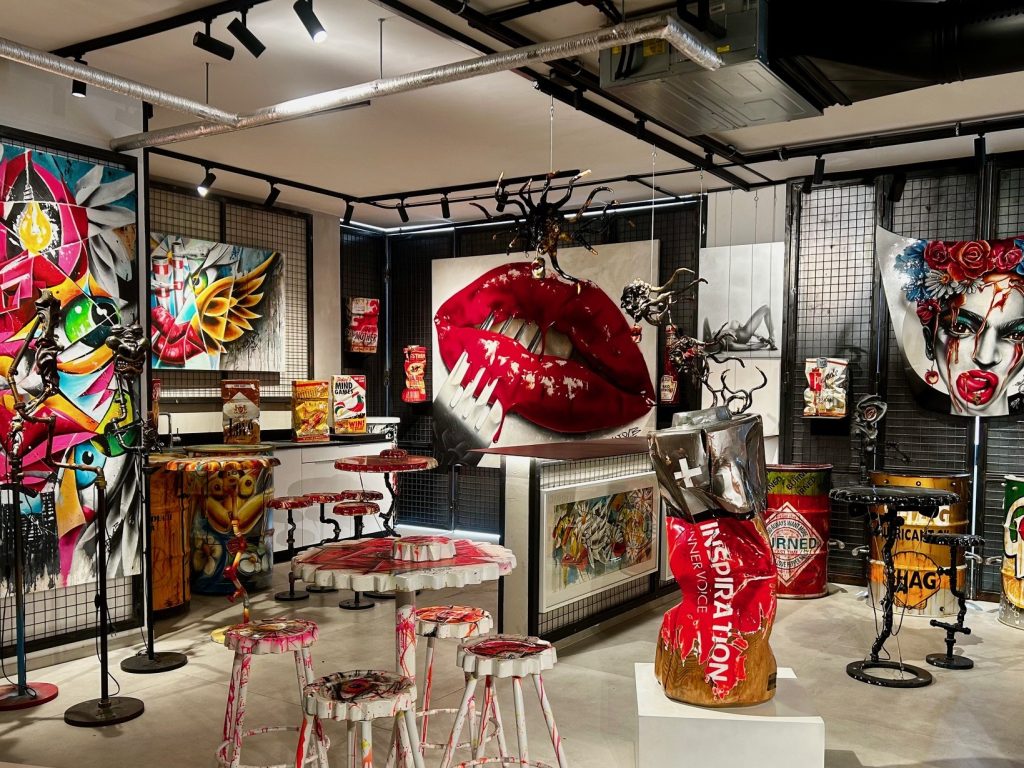
How would you describe your visual art to someone completely unfamiliar with your work?
It doesn’t fit into any known school. Not classical, not impressionist, nothing conventional. There are cubic influences in some places, realism in others, realism mixed with a grungy street art sensibility. But fundamentally, it’s an expression of wherever I am emotionally at a given time. Some periods I’m dark, so I make dark pieces — things that are so ugly they become beautiful. There’s a thin line between grotesqueness and beauty, between sensuality and indifference. I call it a ceremony of opposites. There’s humor in the work, sarcasm, spirituality, social commentary. It’s all in there.
Your soda sculptures are some of the most recognized pieces. Where did that come from?
During the 2006 war, I was in a dark place. One day, I saw a flattened Pepsi can on the street. Crumpled, expired, destroyed — and yet the colors were still shining, still trying to seduce you. It mirrored exactly how I felt inside: empty, used up, hopeless. I couldn’t stop the war. I couldn’t change the world. I was realizing my limitations for the first time. Instead of going to therapy or escaping some other way, I picked up my chainsaw and started sculpting. I took brand names and replaced them with messages — “Don’t Give Up” instead of 7Up, “Happy” instead of Pepsi. Brands enter every home. So why not use that familiarity to plant something meaningful?
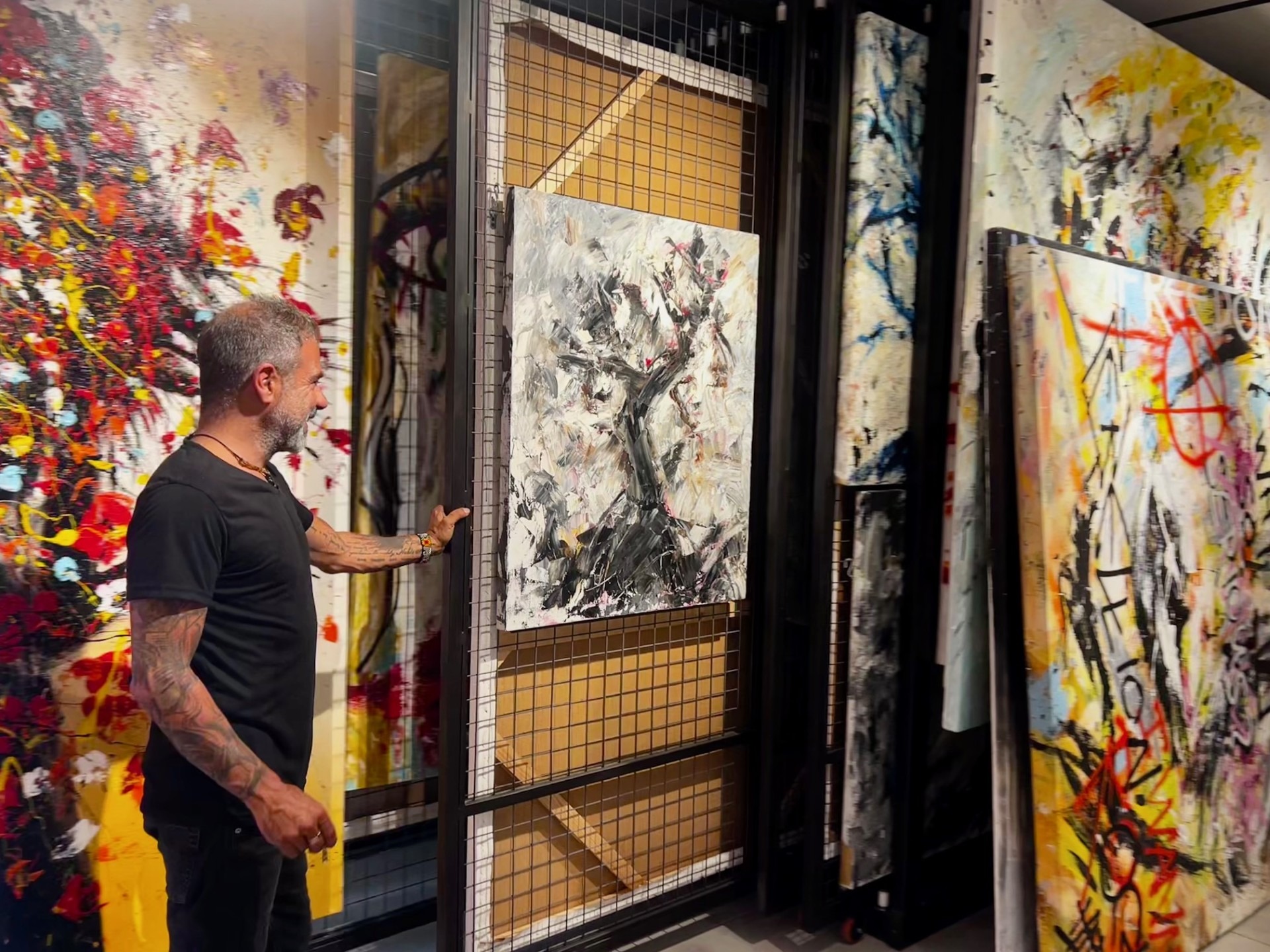
You’ve lived your whole life in Lebanon. What keeps you here?
Everything. My house, my studio, my setup. The people I care about are here. Lebanon is a small pond — if you become a shark in a small pond, you stand out. In America, it’s an ocean. Even if you’re a whale, there are other whales. But more than that: nowhere else has the joie de vivre, the energy, the ease of connection. You meet a stranger here and you already share something. That intimacy doesn’t translate. Maybe if I’d left in my 20s, it would have been a different story. But I don’t belong to any label — not to Lebanese identity, not to any cultural box. I like to think of myself as a fruit of the earth. The joker in the pack of cards: fitting everywhere and belonging nowhere.
What’s next for Hady Beydoun?
I spent the last year building a website — over 900 pieces on it, paintings, sculptures, digital prints, everything. Now I’m researching galleries: New York, Tokyo, LA, Mexico City, Singapore, Seoul. I’ve already made a connection with one gallery in LA. It’s a long process, and I’m doing most of it alone, which means less time to create new work. There’s also a major public art project I’m developing, potentially 30 meters wide and 8 meters high, in reinforced concrete and metal. And I’m writing a book — poetry paired with art, each series of work matched with the writing from that same period of my life. It’s a whole progression, from where I was emotionally in the 90s to now. Everything is connected.
If you enjoyed reading this, check out our interview with Lebanese architect Bernard Khoury.
Loading