



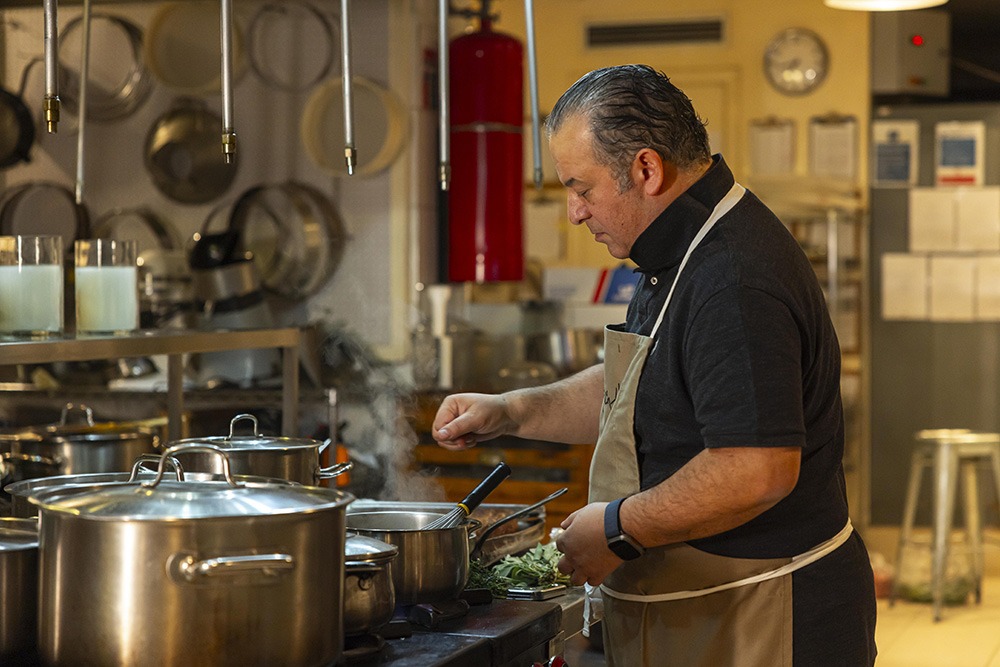
From bustling kitchens in New York to some of Lebanon’s most sought-after tables, Hussein Hadid has built a reputation rooted in discipline, passion and an unwavering commitment to quality. A chef and restaurateur who believes that good food should bring joy, Hadid’s journey spans continents, industries and decades of hands-on experience. Today, as he leads projects like the Pavilion Café at Beirut’s National Museum and collaborates on meaningful culinary initiatives, he reflects on the lessons that shaped him, the values that guide him and why cooking well is ultimately about making people happy.
How did your journey with food begin?
I grew up surrounded by food. The Hadids loved to eat, and on my mother’s side, the Said family appreciated good food just as much. My mother is originally from Palestine, and my father is Iraqi, but we are very much Beirutis. I grew up in the city and spent summers in our mountain house in Sofar. In Lebanon, family gatherings were always around the table, especially with my grandmother, who was very socially active and exposed us to many different experiences from a young age. Being around that environment naturally shaped my palate and my appreciation for hospitality.
Many chefs say they always knew this was their calling. Was that the case for you?
Not exactly. I started in business and finance, but I was always drawn to food. Eventually, after the market crash in London in 1987, I reconsidered my path. Working in a Lebanese deli and later studying at the French Culinary Institute in New York confirmed that this was where I belonged.
You trained abroad. How did those experiences shape you?
My time in the United States was fundamental. I learned both management and cooking, and I understood the importance of being hands-on — respecting every role in the kitchen. Tough environments teach you resilience, organization and attention to detail.
When did you feel you had established your reputation as a chef in Lebanon?
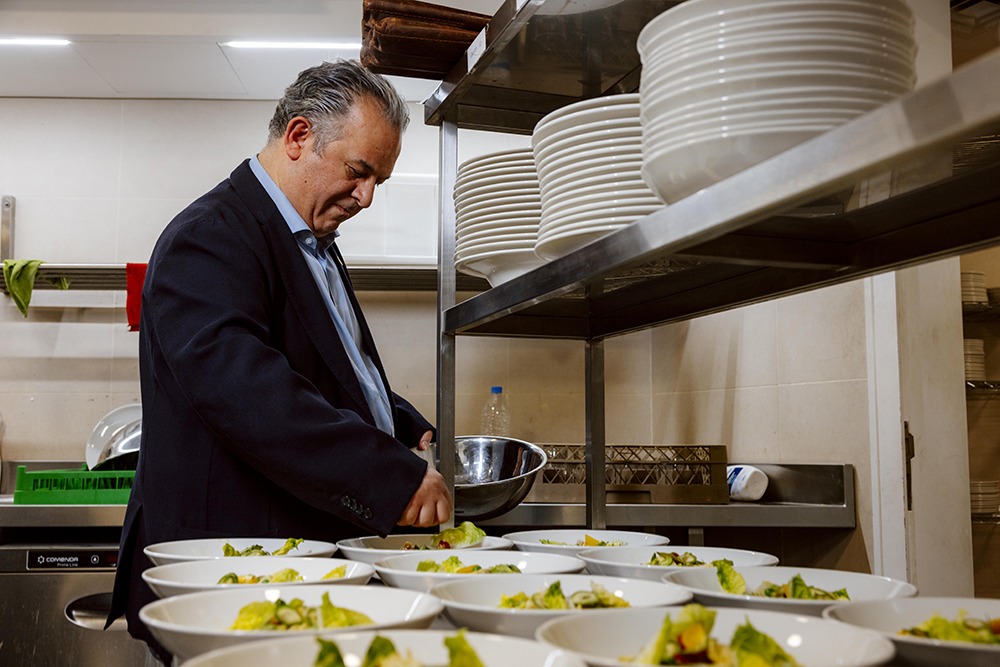
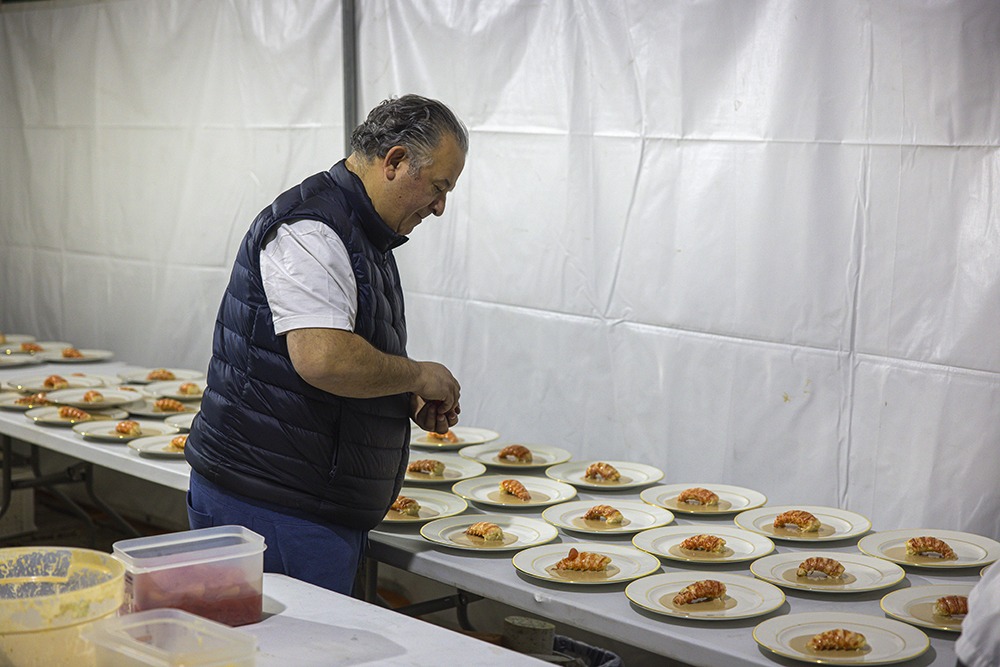
That came in the early 2000s, mainly through catering. It was all word of mouth — doing things properly for a high-end crowd who appreciated quality. One successful event would lead to another, and gradually people began to recognize the name.
You were well known even without a single flagship restaurant at first. How did that happen?
Catering played a big role, but later projects like BurgerCo, PizzaCo and Delico helped as well. My idea was to create places where people could eat well in a relaxed, family-friendly environment — even if I wasn’t there every day. For me, every meal should be good to excellent. There is no space for mediocrity.
Your aunt was the legendary architect Zaha Hadid. What influence did she have on you?
She was extraordinary — driven, creative and fearless. Through perseverance and sheer hard work, she built an incredible legacy. Watching her taught me the importance of believing in your vision and following through.
What defines a true chef?
You have to know your business and respect the craft. Being a chef is demanding — it requires sacrifice, technique and discipline. Marketing can create hype, but real credibility comes from hard work and consistency.
What is your guiding philosophy in the kitchen?
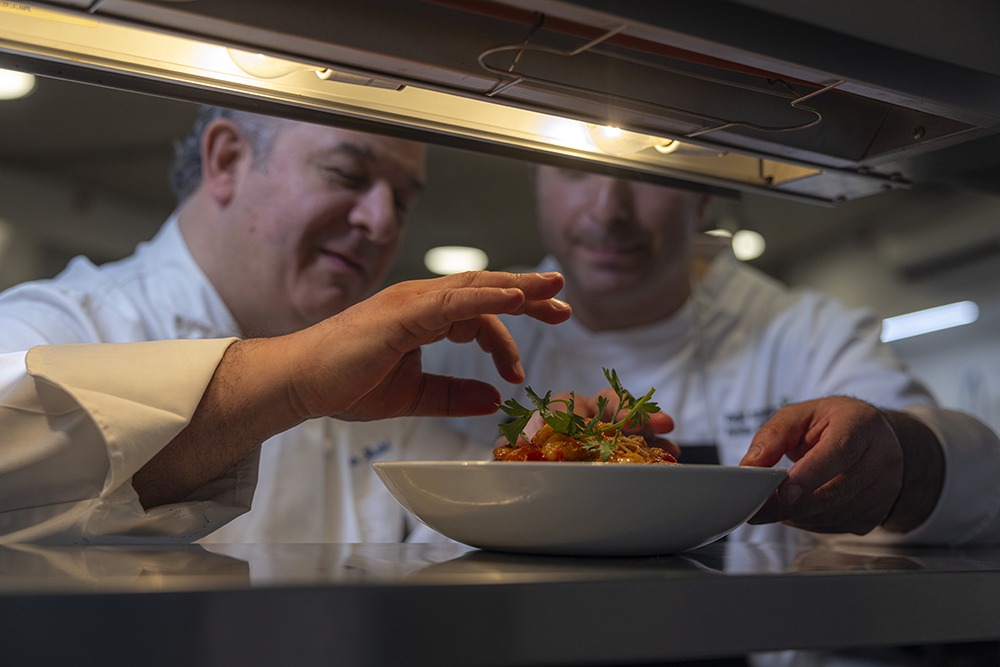
I don’t have a mantra, but I always say: cook well and make people happy. Bringing a smile to someone’s face when they leave your restaurant, that’s the greatest satisfaction.
What advice would you give your younger self?
Stick to the same training and hard work. Learn proper techniques and don’t rely on trends or social media. Discover your own style, focus on taste and never accept halfway results. Good food must be truly good. Too many places focus only on volume and numbers, but for me, quality is non-negotiable.
How would you describe your relationship with Lebanon?
Lebanon is my country, and it should always come first. We all have a responsibility to care for it and work toward making it better.
What are your recommendations for a first-time visitor to Lebanon?
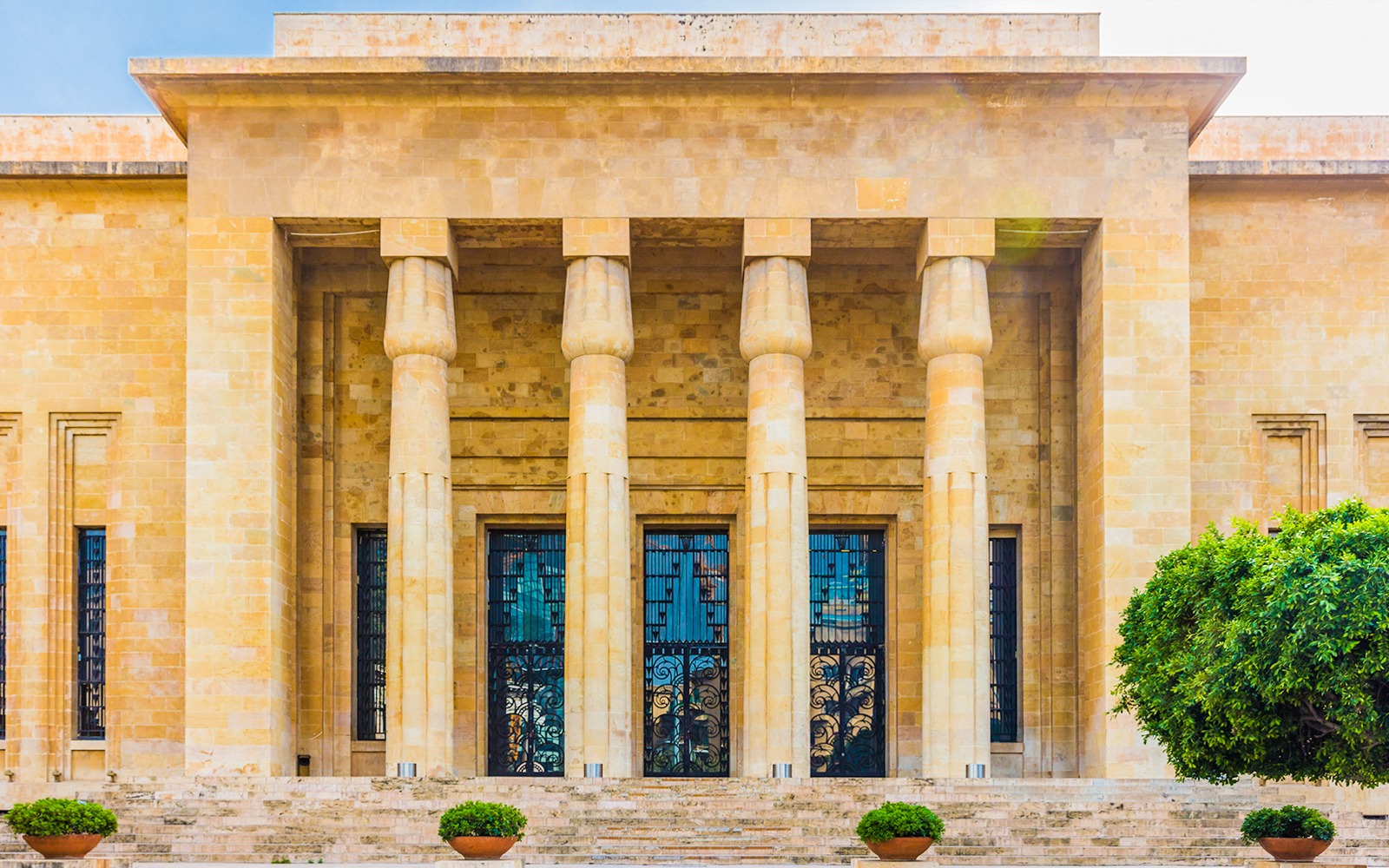
The National Museum of Beirut is essential — it holds so much history. Visit the mountains, the beach, Baalbek, Byblos and South Lebanon, which is incredibly beautiful. Lebanon offers stunning scenery everywhere you go.
You’re currently involved with the Pavilion Café at the National Museum. What makes it special?
The Nuhad Es-Said Pavilion for Culture is deeply personal — my family was closely involved in its creation. The Pavilion Café is designed to be accessible to everyone, with profits supporting the museum’s sustainability. It’s simple, elegant, affordable and welcoming — a place where all walks of life can gather.
How do you disconnect when you’re not working?
Travel is my escape. When that’s not possible, sometimes the best luxury is simply sitting at home in silence. Our industry is full of adrenaline, so moments of calm are precious. I enjoy taking road trips in the mountains or along the coast. It’s nice to stop and have a good, authentic meal somewhere.
What projects are you working on now?
We’re hosting a fundraising dinner with two-Michelin-star chef Andrés Torres on 12 February to support humanitarian initiatives. It will likely be a five- or six-course collaboration. Beyond Lebanon, I’m exploring consultancy opportunities in Italy, Madrid and Lisbon.
If you enjoyed reading this, check out our interview with founder of Tawlet and Souk el Tayeb Kamal Mouzawak.
Loading