



Across Lebanon, religious monuments are woven into the landscape — perched on hilltops, overlooking valleys or rising quietly from village surroundings. More than architectural feats, they reflect stories of faith, resilience and community, each rooted in its own setting.
Saint Charbel Statue in Hammana, Mount Lebanon
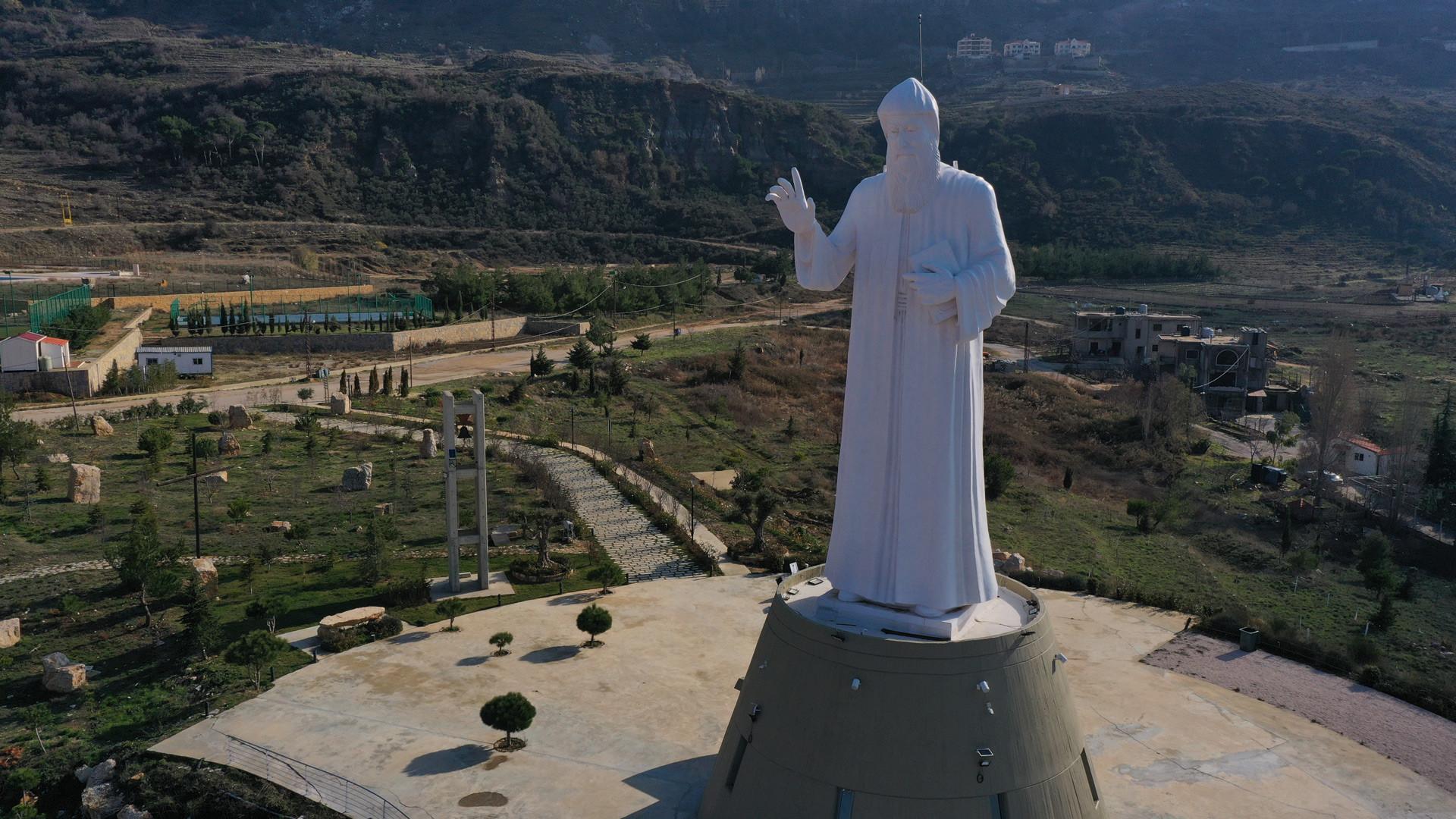
Overlooking the Lamartine Valley, the Saint Charbel statue in Hammana rises above a small hilltop church, surrounded by gardens and walkways. Financed by engineer Charles Barmaki and created by artist Tony Awad, the statue was transferred from Mar Moussa before finding its home here.
In 2018, Bechara Boutros al-Rahi inaugurated the site in the presence of thousands. Today, it remains an active place of pilgrimage, where religious ceremonies are regularly held against a backdrop of sweeping mountain views.
How To Get There
Hammana is located 26km east of Beirut at an altitude of 1,200m. Reach it via the Beirut-Damascus International Highway through Aley and Sofar, or via the Metn Express Highway through Dhour Choueir, Mtein and Falougha.
Jesus Christ Statue in Ghosta, Mount Lebanon
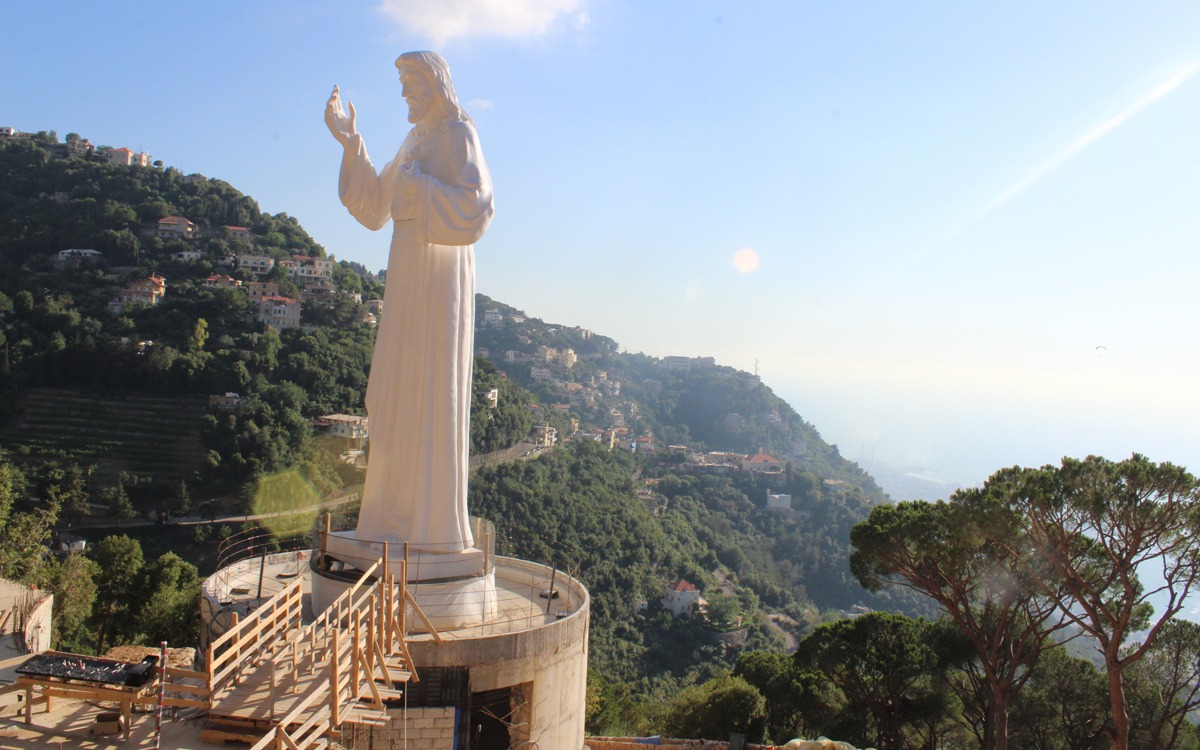
Part of the Mount of Mercy (Jabal El Rahme) project, this statue is embedded within a wider spiritual landscape that includes a chapel honoring Saint Teresa and a museum dedicated to Saint John Paul II. Installed in 2017, the statue stands on a rotating pedestal, turning every six hours to face both the mountains and the coast.
In front of it, an esplanade with 12 fountains represents the disciples of Christ, while surrounding trails — some leading from the old Kreim convent — attract both pilgrims and hikers. The project extends beyond the monument itself, creating a layered experience of faith, nature and movement.
How To Get There
Ghosta is located 36km north of Beirut. The site lies behind the Holy Savior Monastery (Kreim), at 950m altitude. Follow the road from Jounieh to Harissa, then continue to Ghosta where signs lead to the site.
Jesus Christ Statue in Zouk, Mount Lebanon
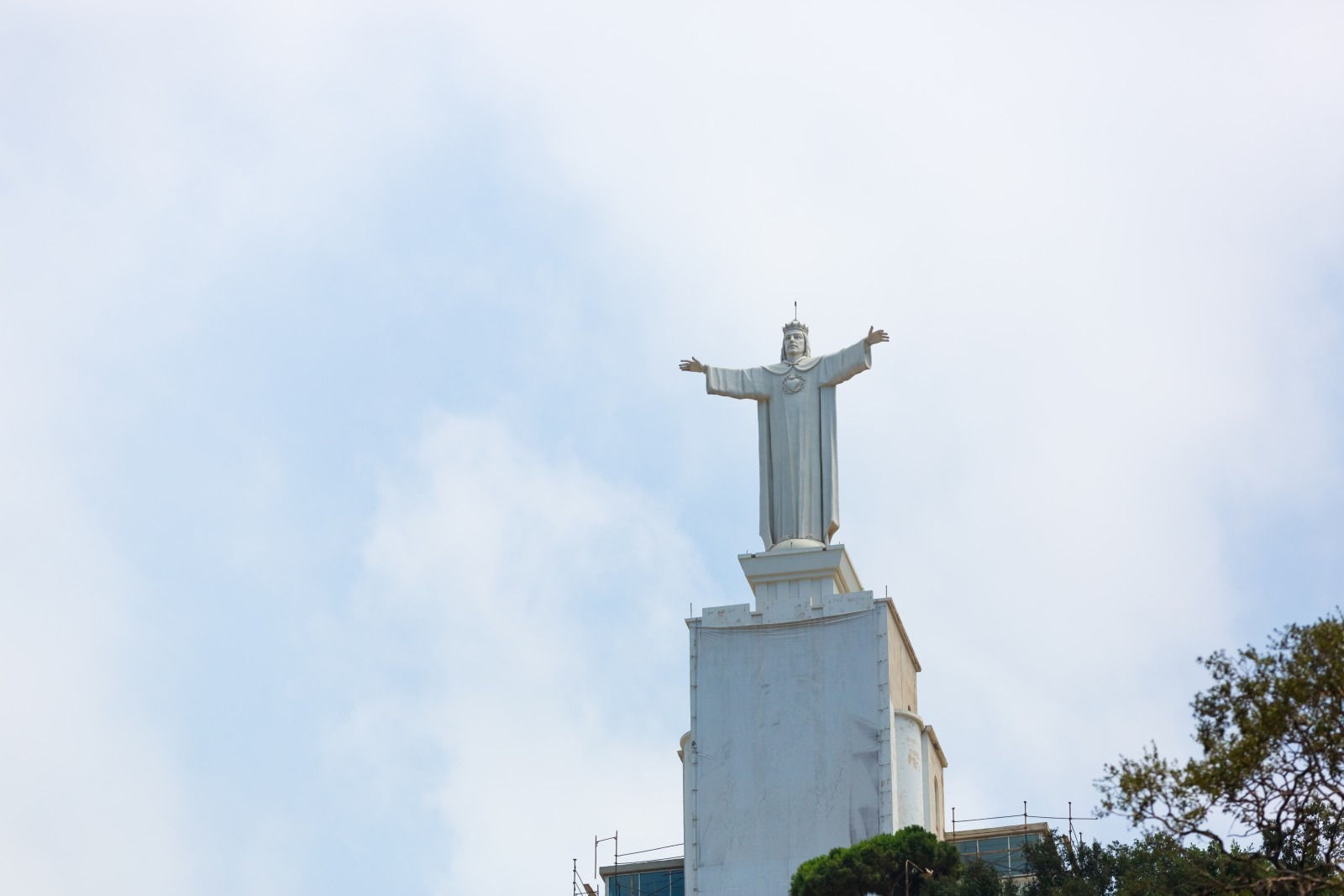
Overlooking Nahr El Kalb and the Mediterranean, this statue is tied to a vision rooted in history. In 1895, Abouna Yaacoub Haddad passed by the valley’s carved inscriptions—markers of passing armies—and imagined a different kind of presence: one of faith.
By 1950, he had acquired land on what was known as the Ruins of the Kings, building a church a year later and commissioning Italian artist Renato Betelia to create the statue, completed in 1952. Today, visitors can climb or take an elevator to the top, where the view stretches across coast and valley, connecting past and present.
How To Get There
Zouk is located 13km north of Beirut. After the Nahr El Kalb tunnel, take the right turn toward the sanctuary Yasou’ El Malak in the direction of Jeita.
Virgin Mary Statue in Harissa, Mount Lebanon
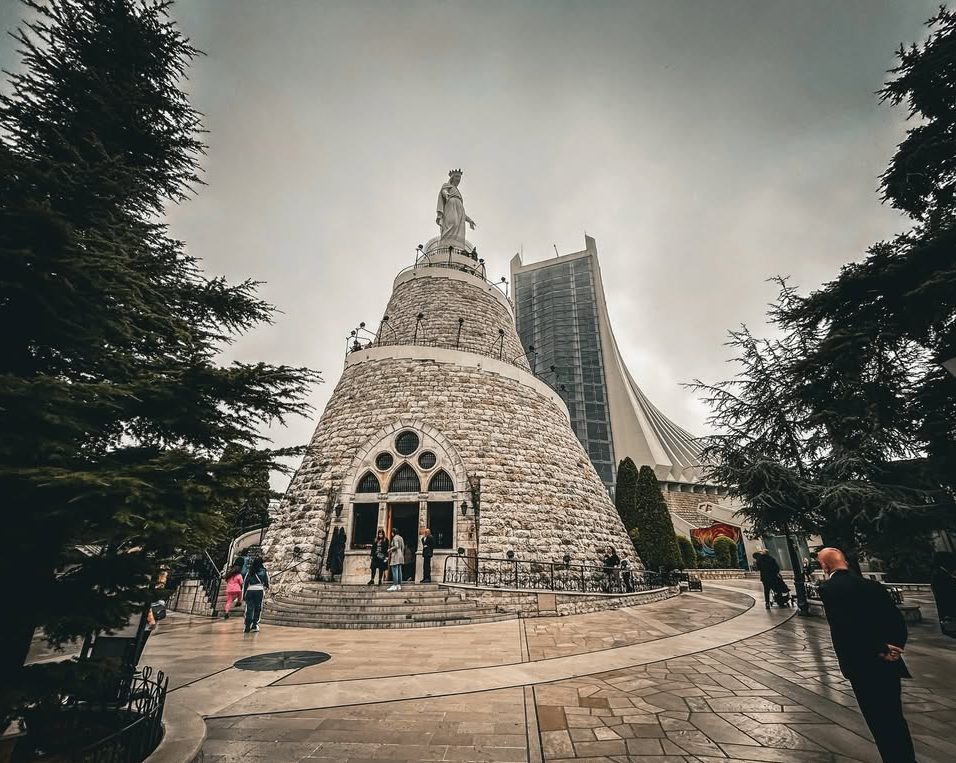
One of Lebanon’s most iconic pilgrimage sites, the Our Lady of Lebanon statue has overlooked Jounieh Bay since the early 20th century. The sanctuary was conceived decades after the declaration of the Immaculate Conception in 1854, with construction beginning in 1904.
The statue itself, crafted in France and installed in 1908, rises above a base that houses a chapel, with a spiral staircase wrapping around its exterior. Nearby, a wooden statue of Mary — once carried across 426 Lebanese towns and villages in 1954 — adds another layer to the site’s history. Today, Harissa remains a place of gathering that transcends religious lines.
How To Get There
Harissa is located 26km northeast of Beirut. Reach it via Jounieh and Bkerke, or take the téléphérique from Jounieh for a more scenic ascent.
Saint Charbel Statue in Faraya, Mount Lebanon
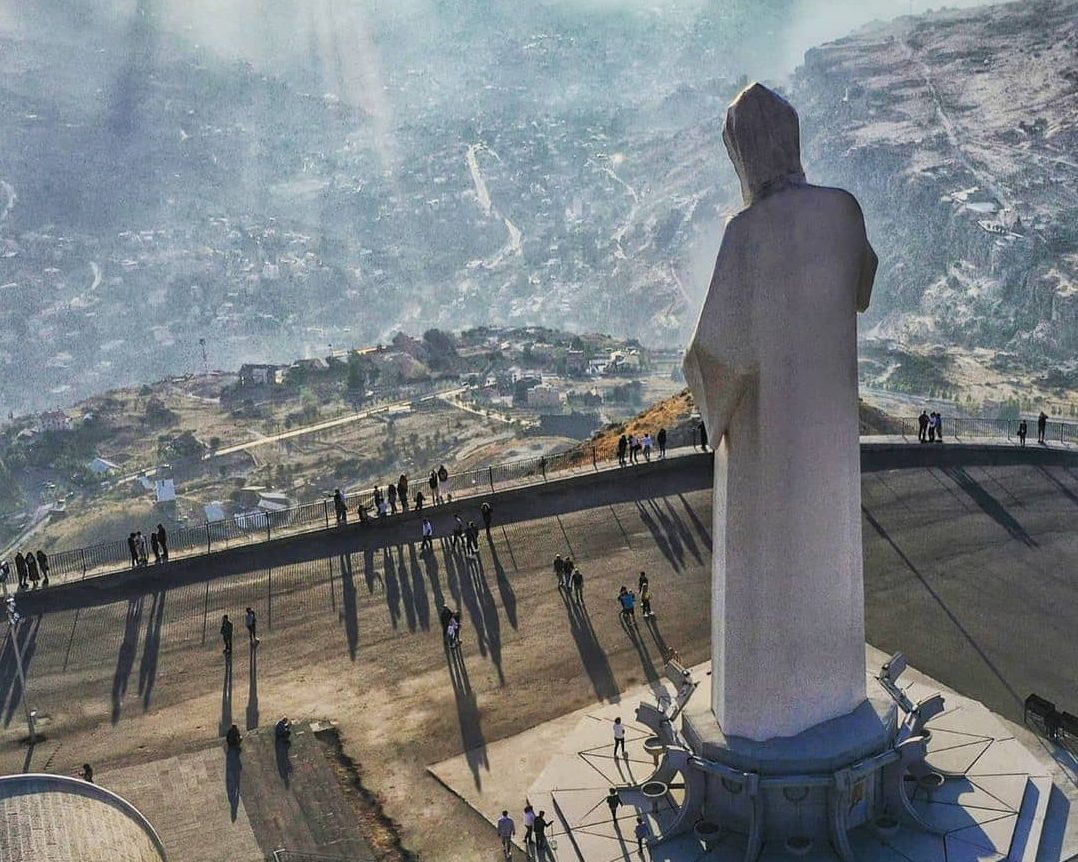
Set high above Chabrouh on Jabal El Salib, this statue of Saint Charbel stands alongside a towering cross, embedded within a dramatic mountain setting. Created by Lebanese artist Nayef Alwan in 2017, the 24-meter statue is said to contain a relic linked to Saint Charbel.
The site’s elevation and isolation shape the experience — reaching it feels like a journey, drawing both pilgrims and visitors seeking quiet reflection in nature.
How To Get There
Thirty kilometers from Jounieh, Chabrouh is located at an altitude of 1,650m. From the Monastery of the Resurrection, follow the road toward Mount Chabrouh to reach the site.
Christ the Redeemer Statue in Al Qaa, Bekaa
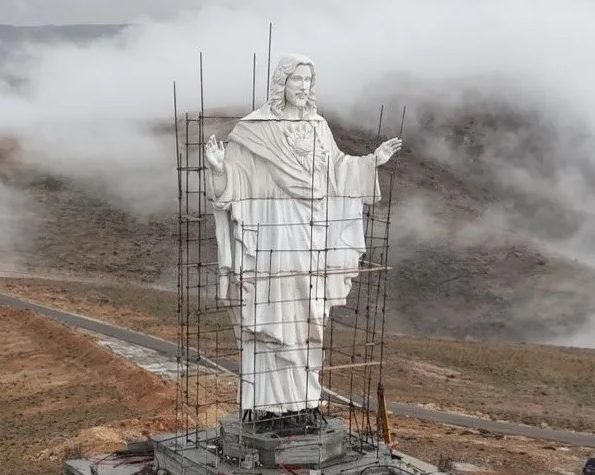
The most recent addition, this statue rises above Jabal Al-Salib in the town of Al Qaa, near the Syrian border. Installed in 2026, it was designed by architect George Makhlouf and brought to life through a local initiative led by Fady Awad, with support from the municipality and residents.
Set in a town that has faced past violence, the monument carries a message shaped by its context. Positioned on what was once considered a frontline, it looks out over the Bekaa Valley as a symbol of protection, resilience and coexistence—and a site that may, over time, grow into a new point of pilgrimage.
How To Get There
Al Qaa is located around 130km northeast of Beirut in the northern Bekaa Valley, near the Lebanese-Syrian border. From Beirut, take the Beirut–Damascus Highway toward Zahle, then continue north through Baalbek and Hermel before reaching Al Qaa. The statue sits atop Jabal Al-Salib overlooking the town, with local roads leading up to the site.
If you enjoyed reading this, check out our article on seven churches to visit in Beirut.
Loading