

When winter snow settles across Lebanon’s mountains, snowshoeing offers a quiet alternative to ski resorts and crowded slopes. The activity allows walkers to move through untouched landscapes, follow forest paths and explore high-altitude terrain at a slower and more immersive pace. Accessible and low risk, snowshoeing is well suited to Lebanon’s geography and requires minimal equipment. It opens up large areas of the country’s mountains throughout the winter season, often far from roads and infrastructure.
Going with a guide or independently
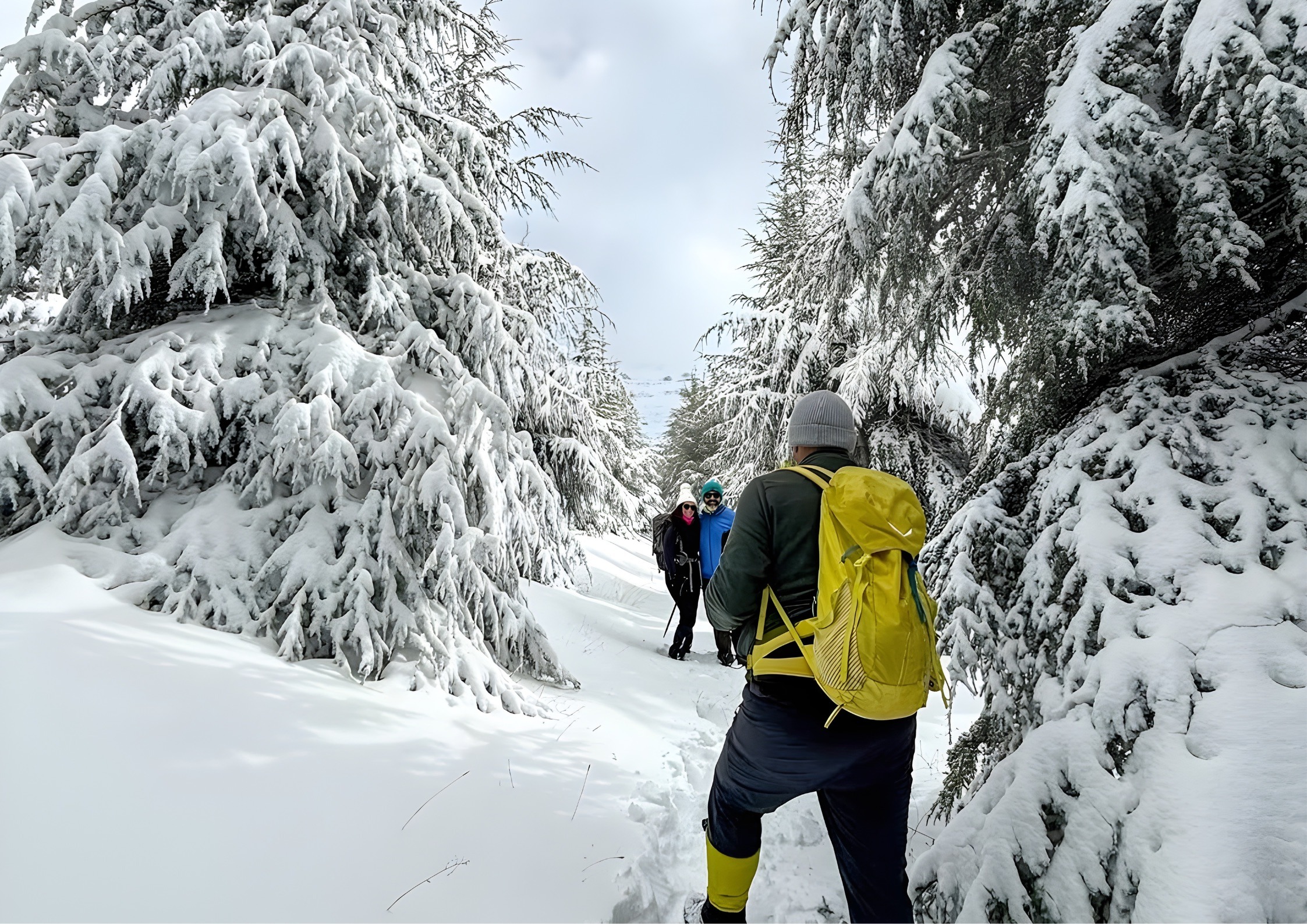
For many first-time snowshoers, joining a guided outing is the easiest way to get started. Local guides usually provide snowshoes, help select suitable routes and adapt plans according to weather and snow conditions. Guided trips also add an important safety layer, particularly in unfamiliar terrain or during unstable winter weather.
Several operators organise snowshoeing excursions across Lebanon’s mountains, often including equipment rental as part of the experience. These outings are especially useful for beginners or anyone without access to snowshoes. Operators such as 33North, Dale Corazon’s Lebanon Explorers and Decouvre LB regularly lead seasonal snowshoeing trips in different regions depending on snowfall.
More experienced hikers may choose to snowshoe independently, provided they are properly equipped, familiar with winter navigation and aware of current weather conditions.
When to go
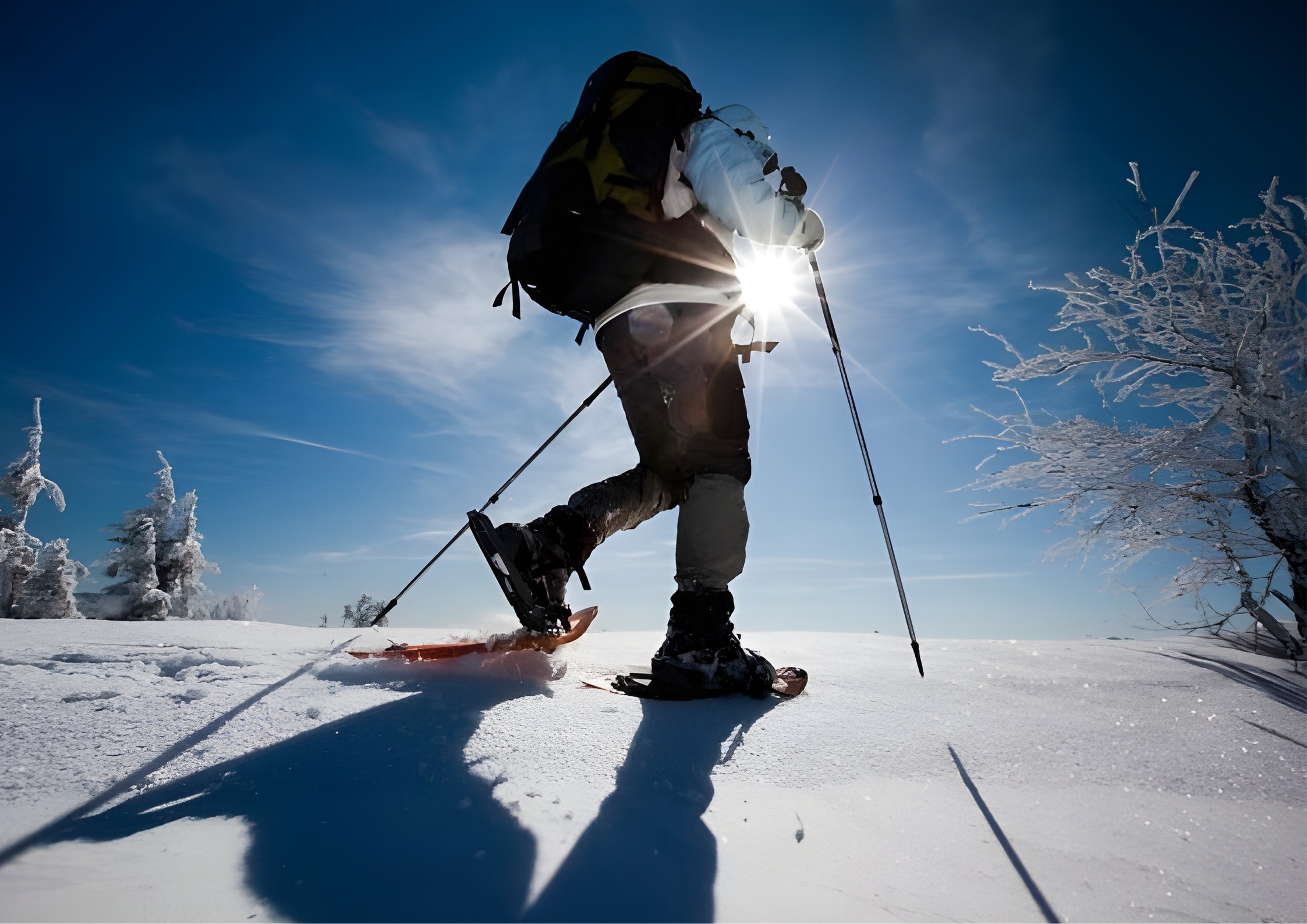
The snowshoeing season in Lebanon generally runs from December until mid March and in some years extends into April. After significant snowfall, areas above 1,500 meters become suitable for snowshoeing, offering fresh powder, crisp mountain air and a sense of isolation that is difficult to find elsewhere in winter.
Unlike skiing, snowshoeing does not depend on prepared slopes or lifts. Forested terrain often remains accessible even during snowfall, making it one of the most flexible winter activities in the country.
Where to snowshoe
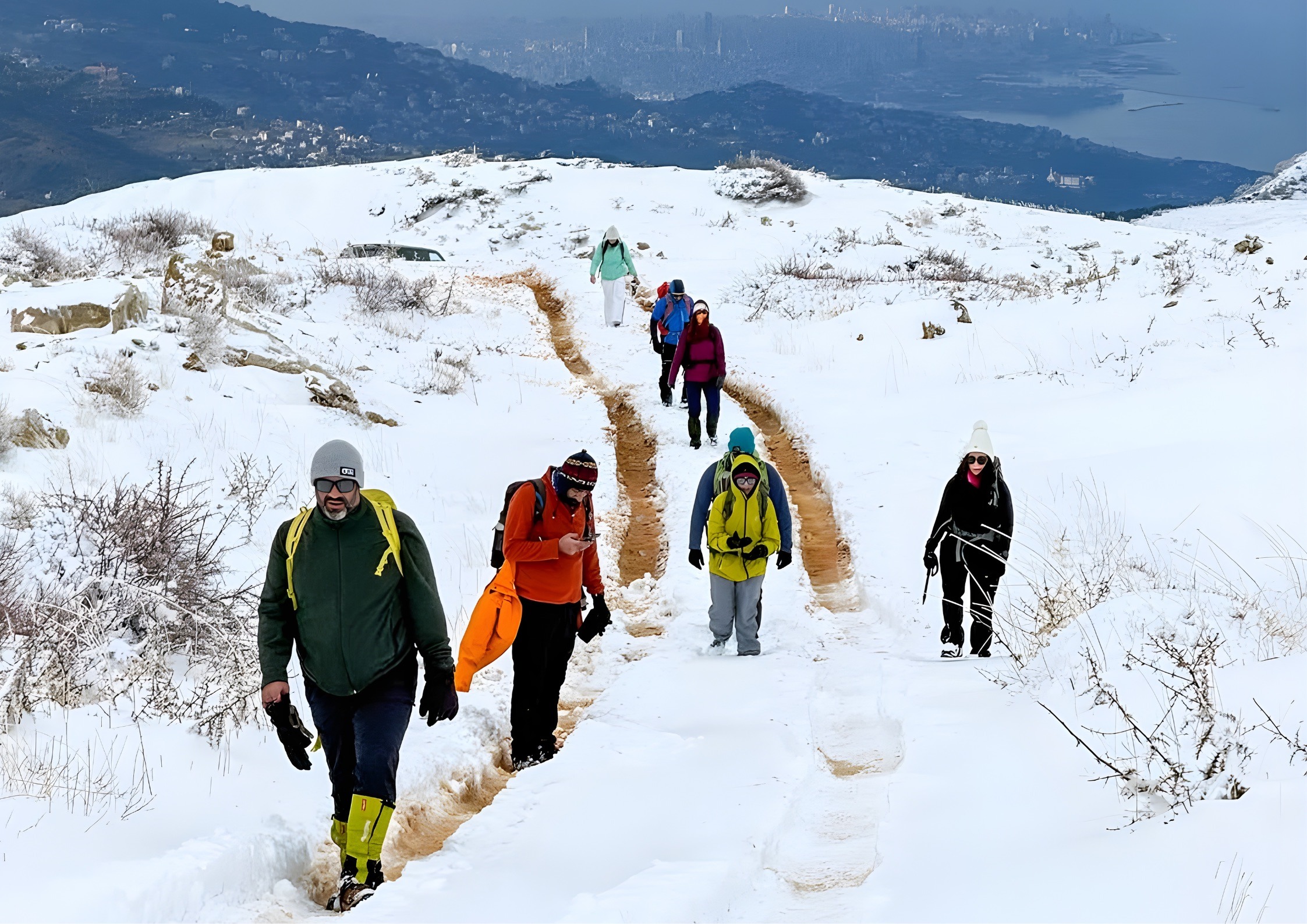
Nature reserves are among the most rewarding places to snowshoe in Lebanon. Horsh Ehden and the Chouf Biosphere Reserve are particularly striking in winter, with snow-covered cedar forests and trail networks that range from gentle walks to more demanding routes. The tree cover provides shelter during storms, while winter conditions often reveal animal tracks from species such as foxes, wolves, hyenas and wild boars.
Beyond protected areas, much of Lebanon’s high-altitude terrain becomes accessible in winter. There are no trails dedicated specifically to snowshoeing, but dirt roads, agricultural tracks and footpaths above 1,500 meters can all serve as routes once covered in snow. Popular regions include Laqlouq, Aqoura, Tannourine, Hasroune, Hadath El Jebbeh and Bcharreh. Ehmej offers two established snowshoeing trails, while experienced snowshoers can venture toward Kornet es Sawda, the country’s highest summit. The upper mountains of Akkar, Hermel and Donniyeh also offer wide open terrain and dramatic scenery.
Equipment and preparation
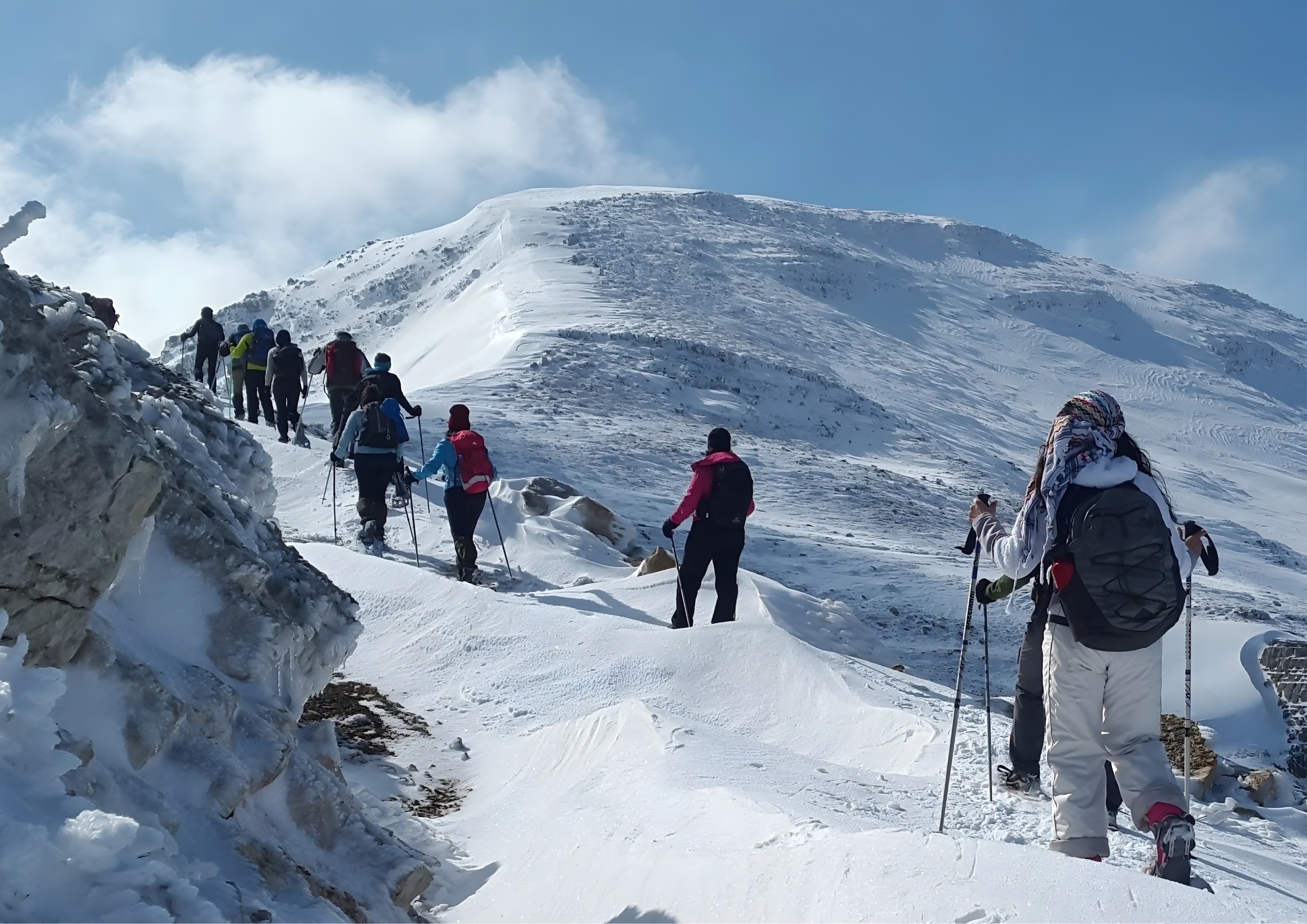
Snowshoeing requires far less equipment than alpine sports, but preparation remains essential. Waterproof hiking boots, warm breathable clothing and a reliable backpack form the foundation of a safe outing. Carrying sufficient water, high-energy snacks and hot drinks is strongly recommended, particularly during longer walks.
Basic safety equipment should always be included, such as a first aid kit with a survival blanket, a headlamp and winter navigation tools when venturing into remote areas. Alcohol should be avoided, as it increases heat loss and impairs judgment in cold conditions.
For those joining guided outings, snowshoes and sometimes poles are typically provided, but participants should always confirm what is included in advance.
Safety in winter conditions
Mountain weather in Lebanon can change rapidly, with fog, wind and snowfall appearing without warning. Snowshoeing should never be done alone and routes should be chosen according to experience level and current conditions. A fully charged mobile phone and advance weather checks are essential, particularly outside managed reserves.
For beginners, staying within forested areas or established routes and opting for guided trips can significantly reduce risk while allowing for a more confident introduction to winter terrain.