



In the hillside village of Rachana, where monumental sculptures rise among olive trees and stone speaks quietly to the sky, art is not confined to studios or galleries. It lives in the landscape, in daily gestures and in the bonds passed between generations. Sculptor Anachar Basbous and his daughter Shana, creator of sculptural jewelry, share a creative language shaped by form, movement, and trust. Together, they navigate a dialogue between monumentality and intimacy — translating large-scale sculpture into wearable works that carry heritage close to the body.
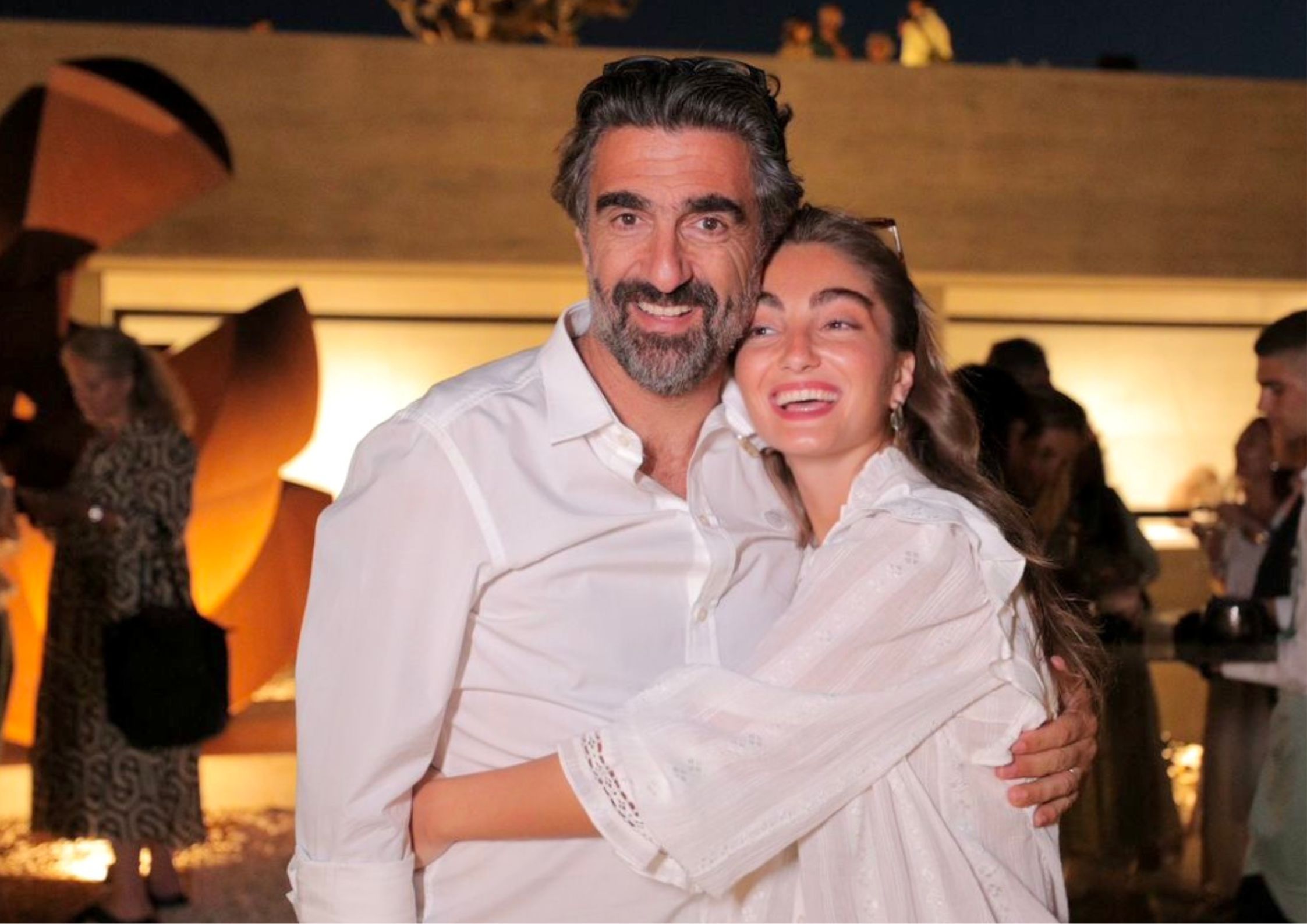
How would you describe your work and artistic practice?
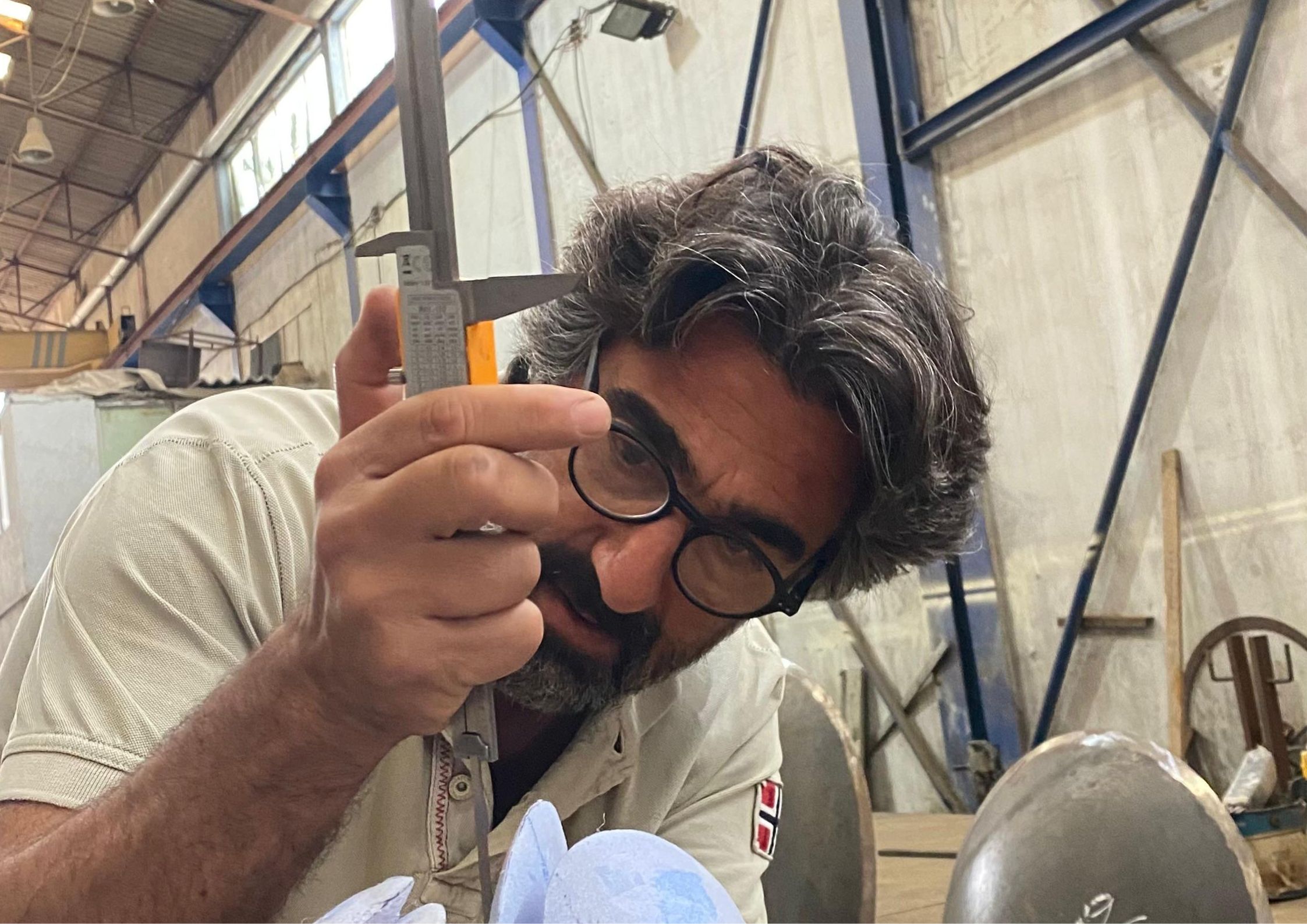
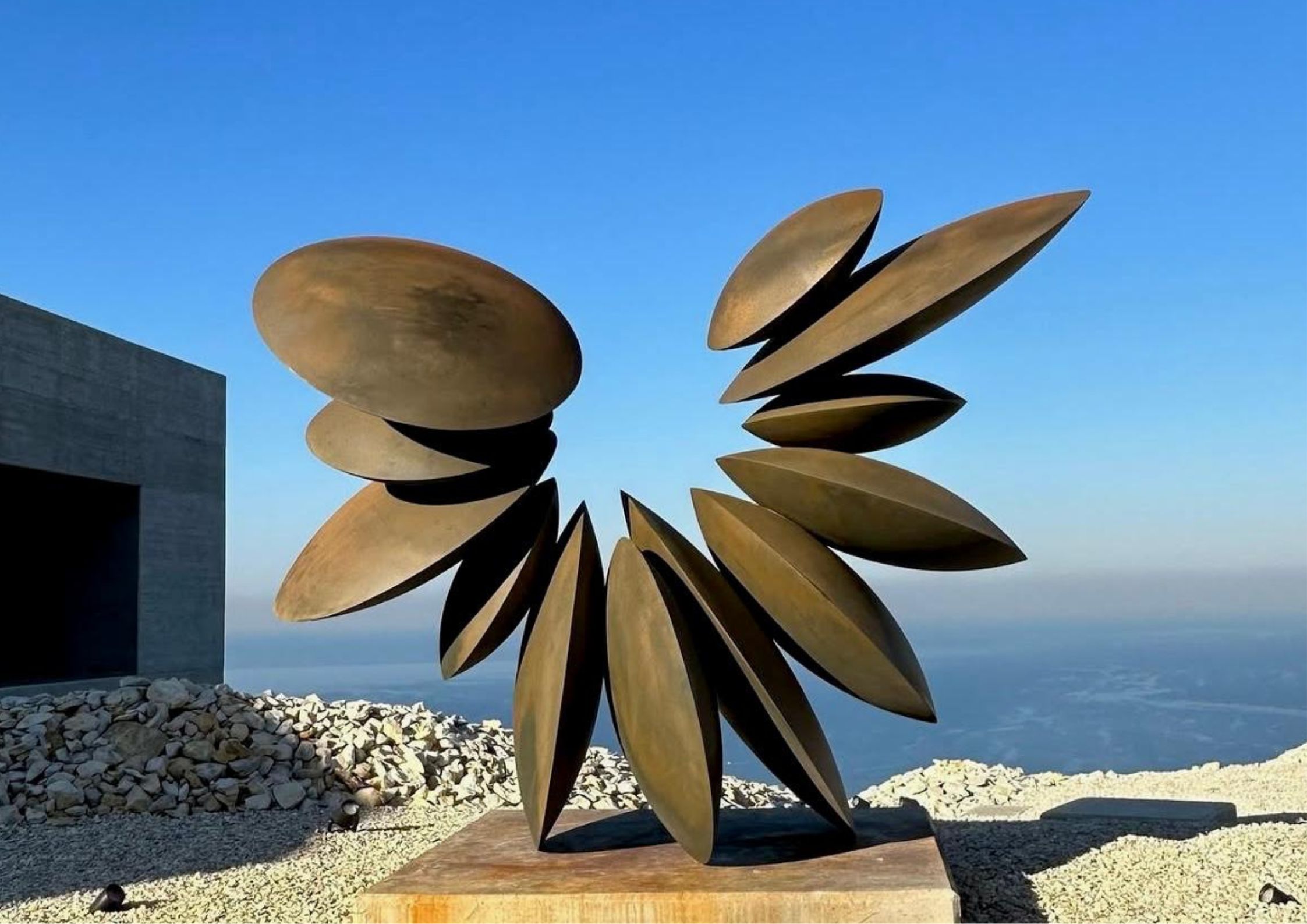
Anachar: I am a sculptor working mainly with stone, metal, and wood. My practice explores balance, movement, and the relationship between form and space, often at a monumental scale.
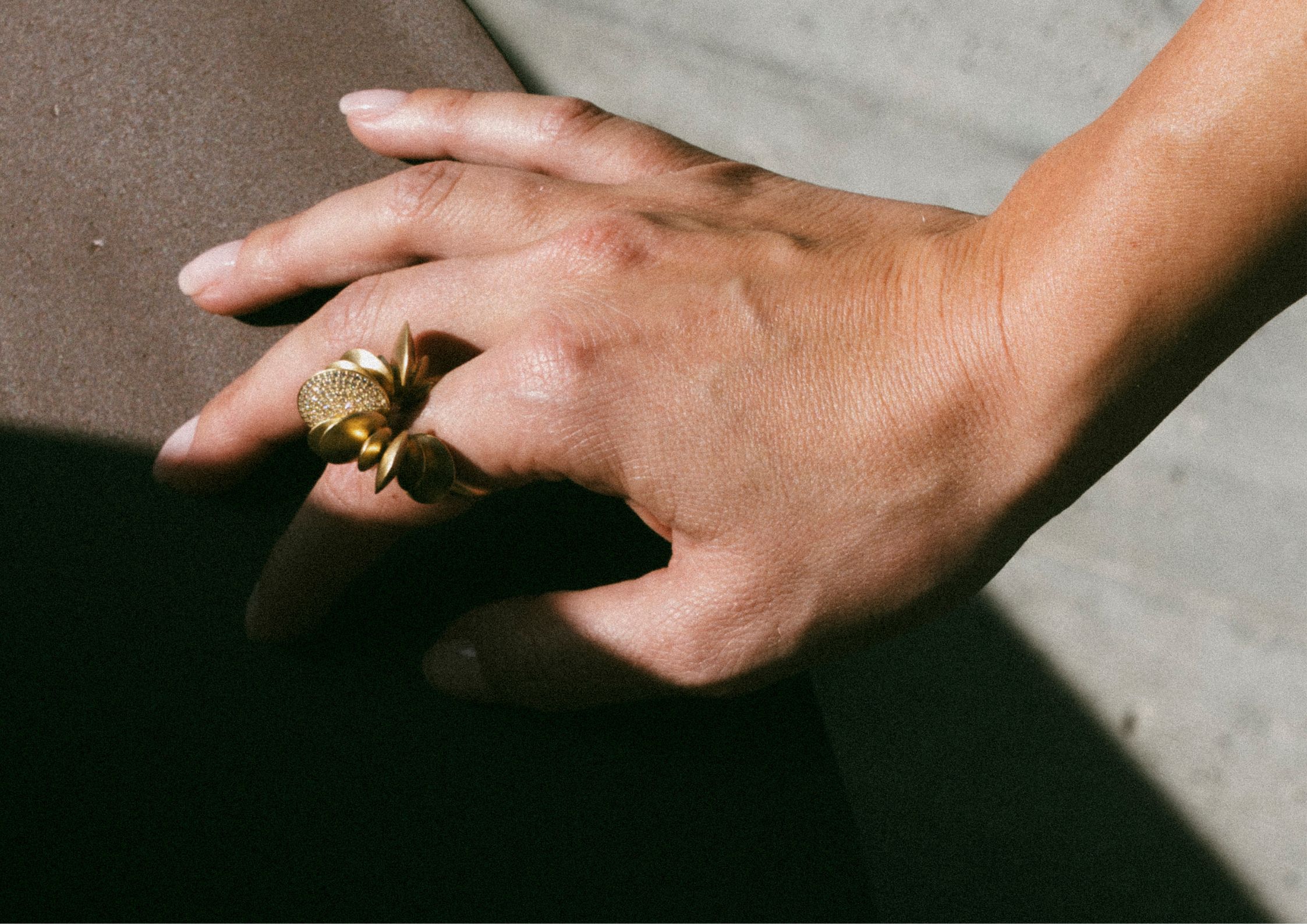
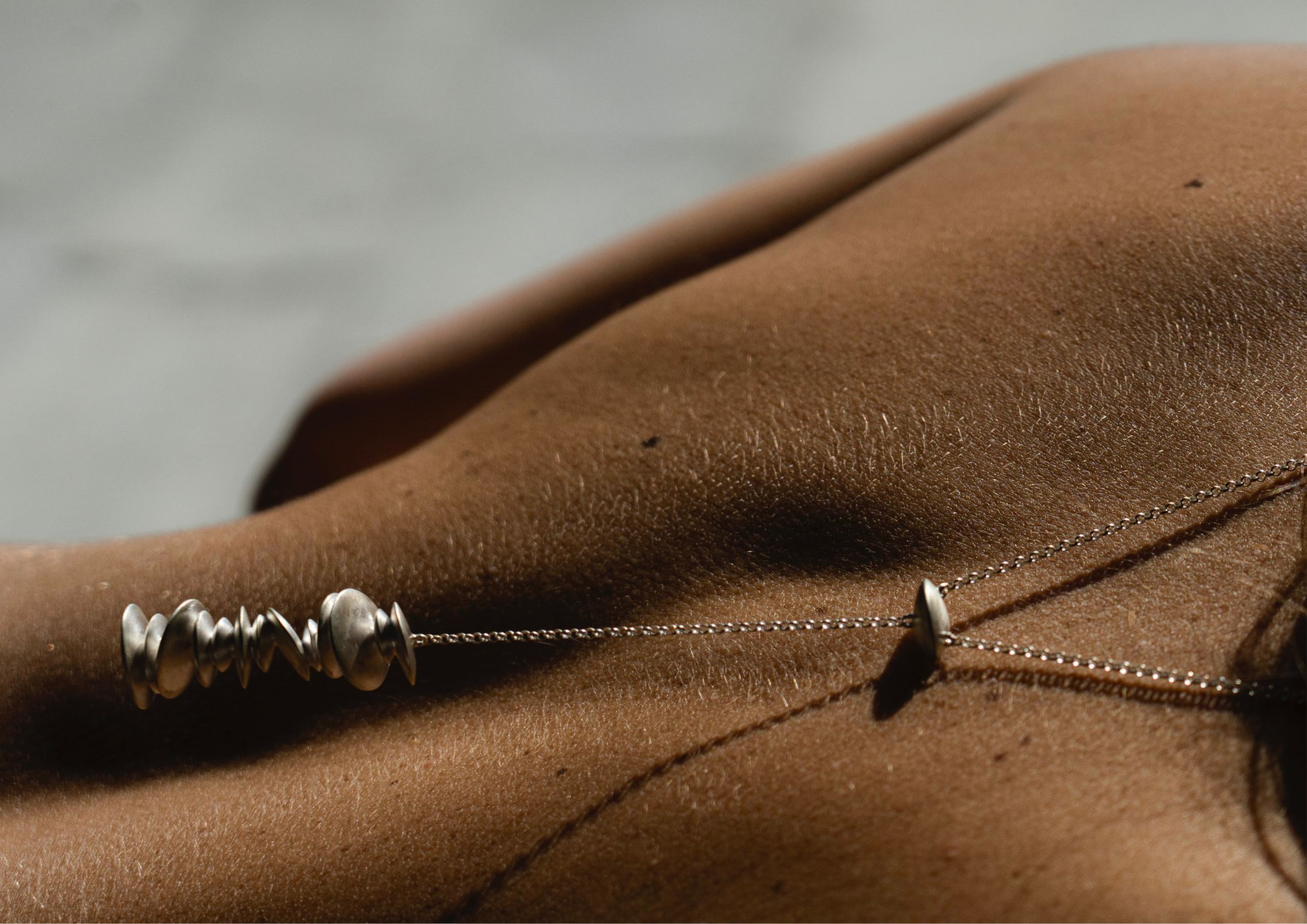
Shana: I create sculpture-jewelry, wearable interpretations of my father’s monumental sculptures. My work translates heritage into intimacy, transforming sculpture into pieces that live on the body.
Anachar, what first drew you to sculpture and to working with form and volume?
I am the son of a great sculptor, Michel Basbous, and without a doubt, my childhood and adolescence spent around my father’s sculptures and creative world were decisive in my choice to become a sculptor myself. At the same time, my attraction to architecture — and my first year of architectural studies — taught me a lot about working with volume, shadow, and light. Architecture and sculpture are, in many ways, almost twin forms of art.
Shana, when did you decide to express yourself through jewelry, and what attracted you to this medium?
The idea for “Shana” actually came to me while I was living in Paris. I was graduating from an art market school, studying international art markets, and at the same time working at Galerie Mennour, one of the leading contemporary art galleries in Paris. While preparing for my graduation, I wanted to wear something meaningful, something that carried a part of my world. So I created my first Nayzak pendant, based on one of my father’s sculptures from the Nayzak series — my favorite one.
I wore it that day and shared it on social media with the caption: “mon avenir proche, proche de mon cœur.” I was deeply touched by people’s reactions. That night, I felt something shift. It felt like closing one chapter — the world of galleries, auctions and the art market — and opening another that felt more like me, like home: the world of creation.
As father and daughter, how did art naturally find its place in your relationship?
Shana: I grew up in a world where art was part of everyday life. My grandfather, Michel Basbous, was a pioneer who transformed the village of Rachana into an open-air museum in the 1950s, where sculptures became part of the landscape. My father continued that vision, giving movement and emotion to stone, metal, marble and wood. Art was never something distant — it was my language, my home, my rhythm. My grandmother, ma tata, a poet and writer, filled my world with words and light. I grew up surrounded by art, poetry, and nature. The light of Rachana, the wind, the dialogue between stone and sky — it all lives inside me. It made me sensitive to form, balance, and the poetry of space.
Anachar: Our relationship goes beyond that of father and daughter. It can be summed up in one word: trust. Just as my mother once looked at my work with a critical and honest eye, that same sense of trust has been passed on to Shana. She has revived that critical gaze, creating between us a deep complicity and mutual confidence.
Shana, how does your father’s sculptural universe influence your designs without limiting your own creative voice?
His work gives me a foundation — a language of form and balance. But my role is to reinterpret it, shift scale and material, and express my own sensitivity through intimacy, movement and the body. I closely follow my father’s creative process, from small models to monumental execution. Understanding that journey allows me to reinterpret proportions and bring my own vision to life. What fascinates me most is the cycle: idea to small model to monumental sculpture to miniature jewelry. It’s a continuous dialogue between the vast and the intimate.
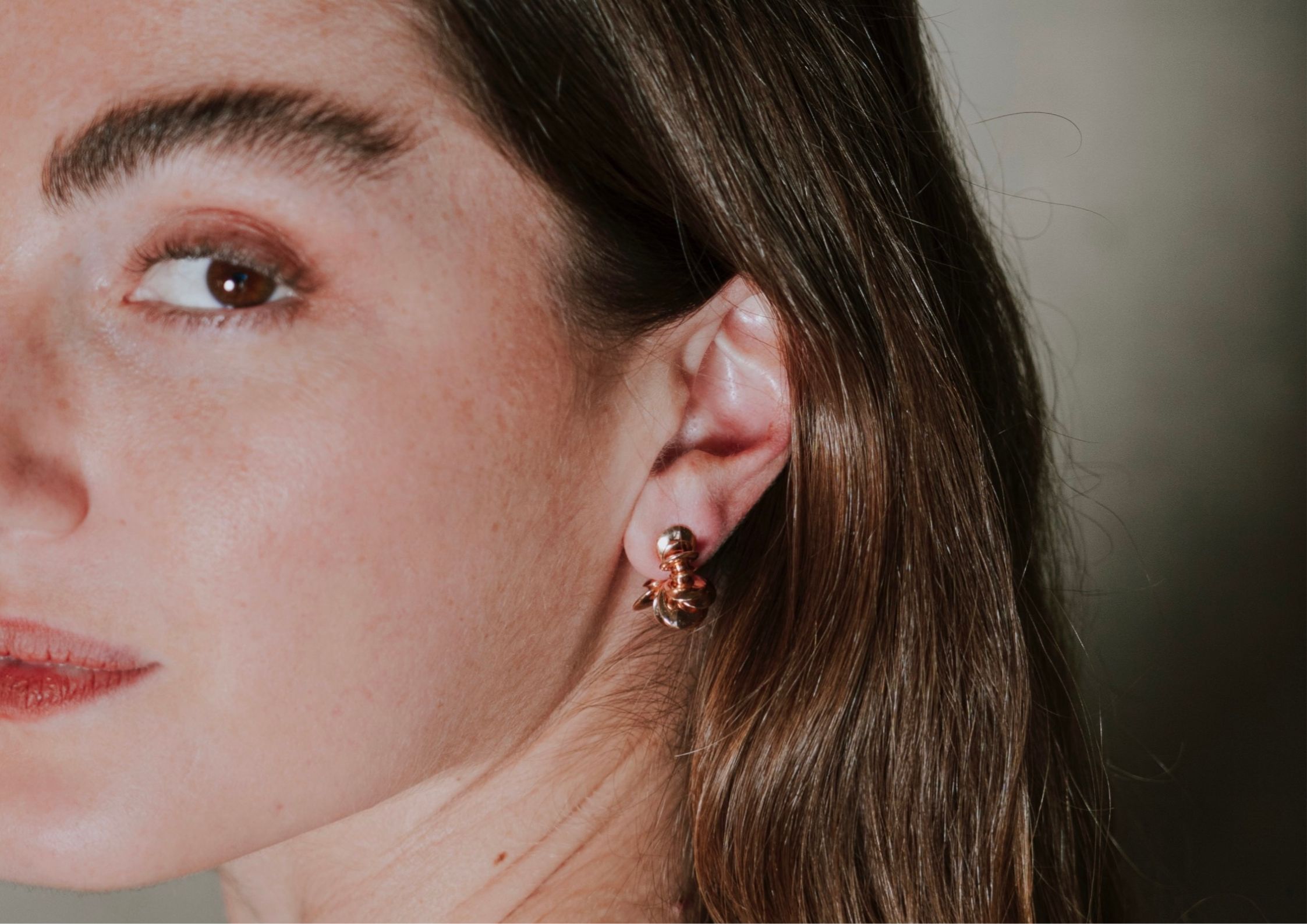
Shana, how does a sculptural form translate into a piece of jewelry? What elements are kept, transformed or left behind?
Shana: When you miniaturize a sculpture, you can’t just reduce it — you must find its essence. Each piece must relate to the body: a ring embracing the finger, a bracelet finding balance on the wrist, a necklace resting naturally on the torso. Certain forms are intentionally left behind if they disrupt comfort or movement. What remains is harmony between form and skin, weight and light. I work with silver, gold, and place diamonds where I want the light to linger.
Anachar, how do you feel when you see your work reinterpreted at a different scale and worn on the body?
The first feeling is pride, pride in seeing my daughter commit to this path while remaining independent in her own jewelry language. There is also deep emotion. Seeing my sculptures exist in dimensions and situations I never imagined — worn on the body, carried through daily life — is a continuous sense of wonder.
Do you exchange feedback or critique each other’s work?
Anachar: Yes. Our dialogue is constant. We rely deeply on each other’s intuition and judgment. This exchange creates a living, evolving conversation that enriches both of our practices.
In what ways does Lebanon continue to shape your artistic language and sensibility today?
Shana: Lebanon is my main source of inspiration — its colors, nature, sky, and sea. I’ve lived in London and Paris, but nothing compares to Lebanon’s light, especially the light of Rachana. That landscape is where my forms, rhythms and universe begin.
Anachar: For me, Lebanon is Rachana. It’s where I live and create. For someone who works with material, light, and shadow, we could not have found a better place.
Your work moves between monumentality and intimacy. How does scale change the relationship between artwork and viewer or wearer?
Anachar: At a monumental scale, the viewer moves around the work.
Shana: At an intimate scale, the work moves with the person — it flirts with the body.
Shana, how do you see your work evolving in the coming years?
I want to keep translating sculptures into movement, exploring new materials, new dimensions, new scales — new stars. My dream is for “Shana” to remain rooted in Lebanese heritage while traveling across the world as a story, a gesture, a piece of home people can wear. I’m a day-by-day person. For now, I’m enjoying every step toward my future. We’ll see where the stars guide me.
Anachar, what advice would you give to younger artists creating in uncertain contexts?
I have two words: be true.
If you had to describe your artistic relationship in one word or one material, what would it be?
Shana: Fire. It warms first. It is alive. It bends metal. It melts gold and silver. And above all, it is a symbol of love.
If you enjoyed reading this, check out our article on MAB, the museum of Anachar Basbous in Rachana.
Loading