


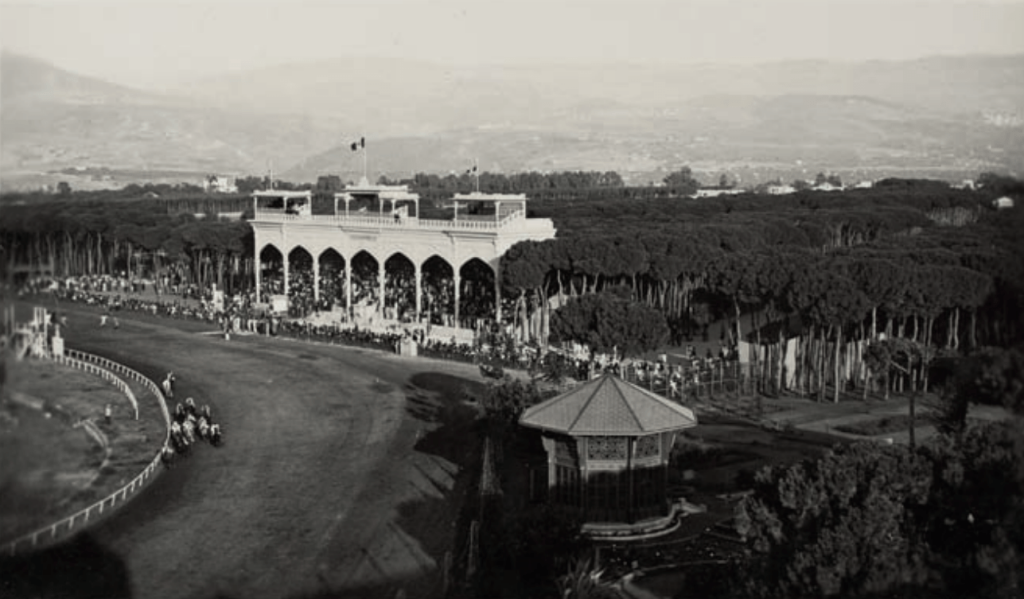
Within 200,000 square meters of unspoiled land, the Beirut Hippodrome offers something increasingly rare in this city: stillness. Stand at its edge and you can feel the capital pressing in from every direction — cranes and glass towers crowding the skyline, traffic noise filtering through the tree line. And yet here, inexplicably, the grass holds. The horses still run. The track endures. It is one of the largest remaining green areas in Beirut without construction, and its survival is not accidental.
A Casino That Never Was
The story of the Beirut Hippodrome begins, as so many Lebanese stories do, with a plan that didn’t quite go as intended. During the Ottoman rule of Lebanon, the wali (governor) of Beirut, Azmi Bek, had heard about a new trend sweeping Europe. With the rise of the automobile, horses were being displaced — and with them, a culture. Hippodromes were being built across the continent to preserve the spectacle of racing, and Azmi Bek wanted one for Beirut.
“The decision was taken in 1916,” explains Nabil De Freige, president of Society for the Protection and Improvement of the Arabian Horse in Lebanon (SPARCA), the organization that runs the hippodrome today. “But before that, we had a small hippodrome — it was where the Kuwaiti Embassy now stands, between the Madinah Riyadhieh and the other place. It was a hippodrome, but nobody went there because it was too far from the town.”
The new site was more ambitious. Lebanese aristocrat Alfred Sursock was given the contract, and the vision was grand: a full racing track with a casino at its center — the casino being the commercial engine that would fund the whole enterprise.
But history had other plans. Construction continued through the war years, and by the time the casino building was completed in 1920, the Ottoman Empire had collapsed. The French arrived. And on the 1st of September 1920, French General Henri Gouraud stood on the unfinished stairs of a building that had never once dealt a hand of cards, and declared the Republic of Greater Lebanon.
“They declared it from the stairs of the casino,” says De Freige. “But the casino was not still a casino — it was only a building.” The French, recognizing a fine piece of architecture when they saw one, promptly converted it into the seat of the French Mandate. It remains the residence of the French ambassador to this day.
“When you enter the French Embassy,” De Freige explains, “it’s exactly like the casinos in Europe. You enter, you have here a big salon, at the left also, and you have stairs going up — left and right. It’s exactly this, with a nice view of the hippodrome.”
With the casino repurposed, the track was shifted slightly, the grand Ottoman stairs were completed in 1923, and the Hippodrome began its proper life. Run initially by a private concession — the Société du Parc de Beirut — under a BOT arrangement, it grew steadily into one of the busiest race tracks in the world.
“From the 1930s to the 1960s, the hippodrome was lovely,” says De Freige. “You had a lot of politicians and presidents who came for official visits, and they used to ask for their meetings to be on the weekend because they wanted to come and see the races. The Shah of Iran and his wife came, as well as King Paul of Greece. It has a beautiful history.”
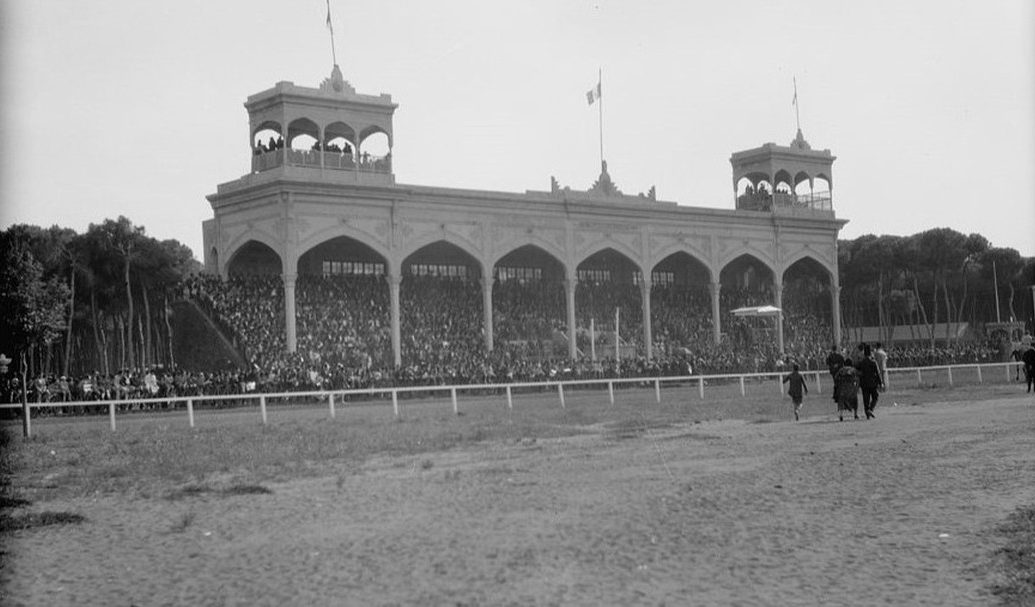
Races took place twice a week — every Saturday and Sunday — and the grandstands filled with the sound of Beirut society at play. In 1966, after 50 years of operation, the private concession ended and the Municipality of Beirut — the legal owner of the land — took over. It did not go well.
Fortunately, the municipality’s president at the time understood his own limitations. He asked a group of horse owners and enthusiasts to form an association — a syndicate — that would manage the hippodrome on behalf of the municipality. The Society for the Protection and Improvement of the Arabian Horse in Lebanon, known by its French acronym SPARCA, was born in 1969, founded by Henri Pharaon, De Freige’s father, Moussa — who loved the animal and was a breeder and an owner — and a circle of gentlemen who were passionate about horses.
“Henri Pharaon was something else,” De Freige says. “He used to take his car and go to the Bekaa, to Akkad, to Syria, to Iraq to buy the best horses. He knew exactly the pedigree, what kind of original bloodline,” says De Freige.
The hippodrome flourished. After returning to Lebanon in 1971, Nabil Nasrallah was appointed as general manager of the race track by Henri Pharaon, a Lebanese politician who had the biggest stables of Arabian horses during the 50s and 60s. A statue of Pharaon now watches over the tracks.
“It was very exciting, because there was plenty of work to do,” says Nasrallah. From the renovation of its original arched facades to installing one of the world’s earliest electronic betting systems, Nasrallah took on the project to modernize the hippodrome. Then, in 1975, the Lebanese Civil War began.
The War Years
What happened next defies easy explanation. The Beirut Hippodrome did not close during the war years. It kept running. “Bombs were falling just a few hundred meters away while 1,500 were gathered in the stands shouting for the horses and betting. It was really something incredible,” De Freige says, smiling.
The hippodrome occupied a peculiar geography during the war — situated on or near the Green Line that divided the city between its warring factions. This made it, paradoxically, a kind of neutral ground.
Then came the summer of 1982. West Beirut was surrounded, and the hippodrome found itself in the middle of one of the war’s most devastating chapters. De Freige, then 27 years old, received a frantic call from an elderly Henri Pharaon — then 82 — who managed the stables on the western side. The roads were closed, the grooms and trainers couldn’t reach the animals, and 350 horses were locked in their boxes with no food and no water.
By chance, De Freige was with people who knew the Lebanese President Elias Sarkis, and by four o’clock they were at the Baabda Palace. The president understood De Freige’s concerns immediately, summoning Philip Habib, President Reagan’s special envoy. His argument was simple: “These horses are our fortune in Lebanon. They are poor horses. We have to save them.”
Three hours later, Habib returned with an answer. A ceasefire — four hours every 48 hours — would allow the grooms to enter. Inside, the scene was devastating: 12 horses had perished. The survivors stood with swollen tongues and glazed eyes. “They were so thirsty,” De Freige says quietly.
Miraculously, around 320 horses made it out, dispersed to farms in the Bekaa and riding clubs across the country. The same afternoon the last horse left, the grand Ottoman stairs — the very steps from which the Republic of Lebanon had been declared — were shelled to rubble.
“This is a picture I took right afterward,” Nasrallah says as he holds a photograph showing the old hippodrome reduced to rubble. “They bombed all the columns and the whole building collapsed. That’s why we came with a new stadium built from concrete,” he says.
Rising Again
Reconstruction began slowly. As early as 1984, the debris was being cleared. For years, races continued from temporary facilities — containers repurposed as offices, a modified track, no grandstands. “In 1990, we started again,” Nasrallah says.
Today, the hippodrome runs once a week, typically on Sundays, with an average of six horses per race — a fraction of the fifteen that once competed in any given heat. The Ottoman stairs are gone. The casino-that-wasn’t is still an embassy. And the 210,000 square meters of green continues to hold off the encroaching city.
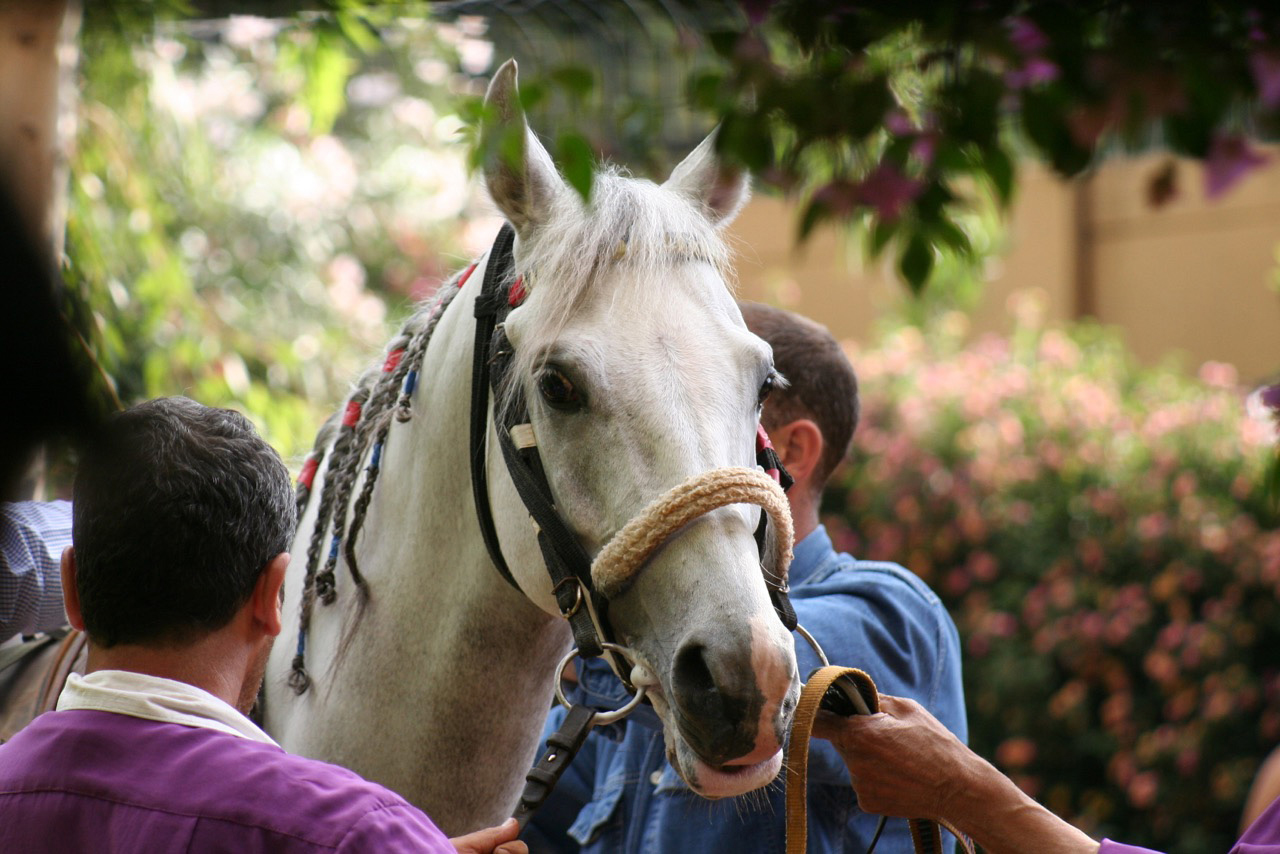
SPARCA’s work has expanded well beyond race management. The organization maintains a DNA database of over 10,000 horses, working in partnership with Weatherby’s laboratory in England to verify pedigrees — because in Lebanon, only Arabian horses may race by law. “That’s why the SPARCA was created,” De Freige explains. “It is an association for the preservation and the improvement of the Arabian horse.” Every horse that steps onto this track can trace its bloodline through a verified chain, tested and logged.
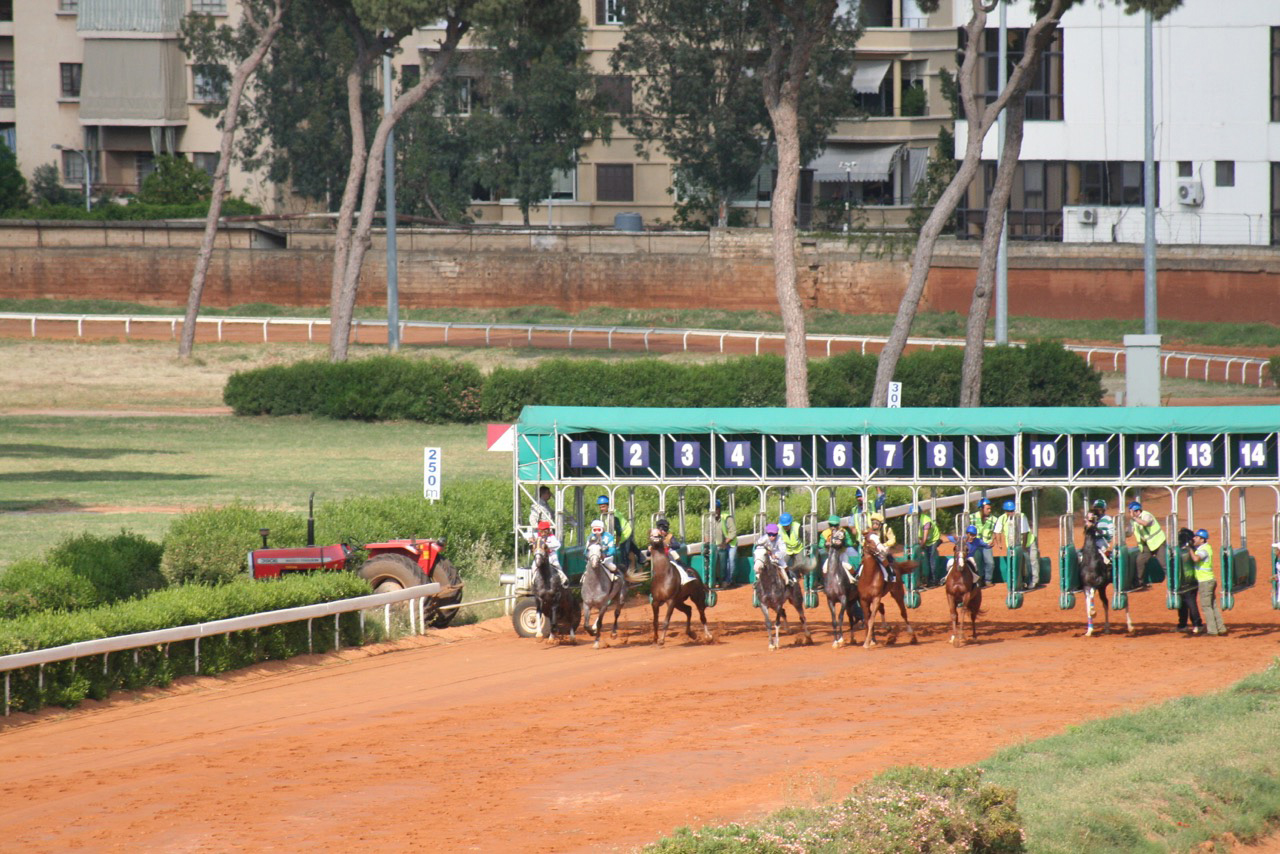
De Freige himself still breeds horses at his family farm near Baalbek in the Bekaa Valley. He has seven or eight horses in the stables here. One of his mares was born in 1999 — 27 years old now, a decorated runner who won 19 races. He checks his phone and shows a photograph: a foal, born just the day before, long-legged and uncertain in the morning light of the Bekaa. That, he says, is what it is really about. Not the winning, not the betting. The watching. The waiting. The years it takes to find out what a horse will become.
However, it is clear that the hippodrome needs investment — estimated at 10 to 15 million US dollars to properly restore it, an amount De Friege and Nasrallah believe would be repaid many times over. “We are the only hippodrome in the Middle East where betting is permitted. It’s a big opportunity,” De Friege says while Nasrallah nods.
Plans exist for 400 new stables and a public green space within the park. With more horses comes more racing; with more racing, more revenue; with more revenue, more of everything. Whether that investment comes — from the Municipality of Beirut, from the state, from somewhere — remains, like so much in Lebanon, an open question. But every Sunday, the horses still run. And in the middle of one of the most chaotic cities in the world, 200,000 square meters of green refuses to become something else.
“We have worked a lot to defend the green area here. It’s one of the few peaceful spaces within turbulent Beirut,” Nasrallah adds.
If you enjoyed reading this, check out the story of the Teleferique of Lebanon.
Loading