

From international film scores to orchestral performances around the world, Khaled Mouzanar’s music carries the imprint of a life shaped by contrast. Raised in Lebanon, where immediacy and instability coexist with beauty and freedom, the composer has developed a musical language rooted in tension, instinct, and transformation rather than preservation.
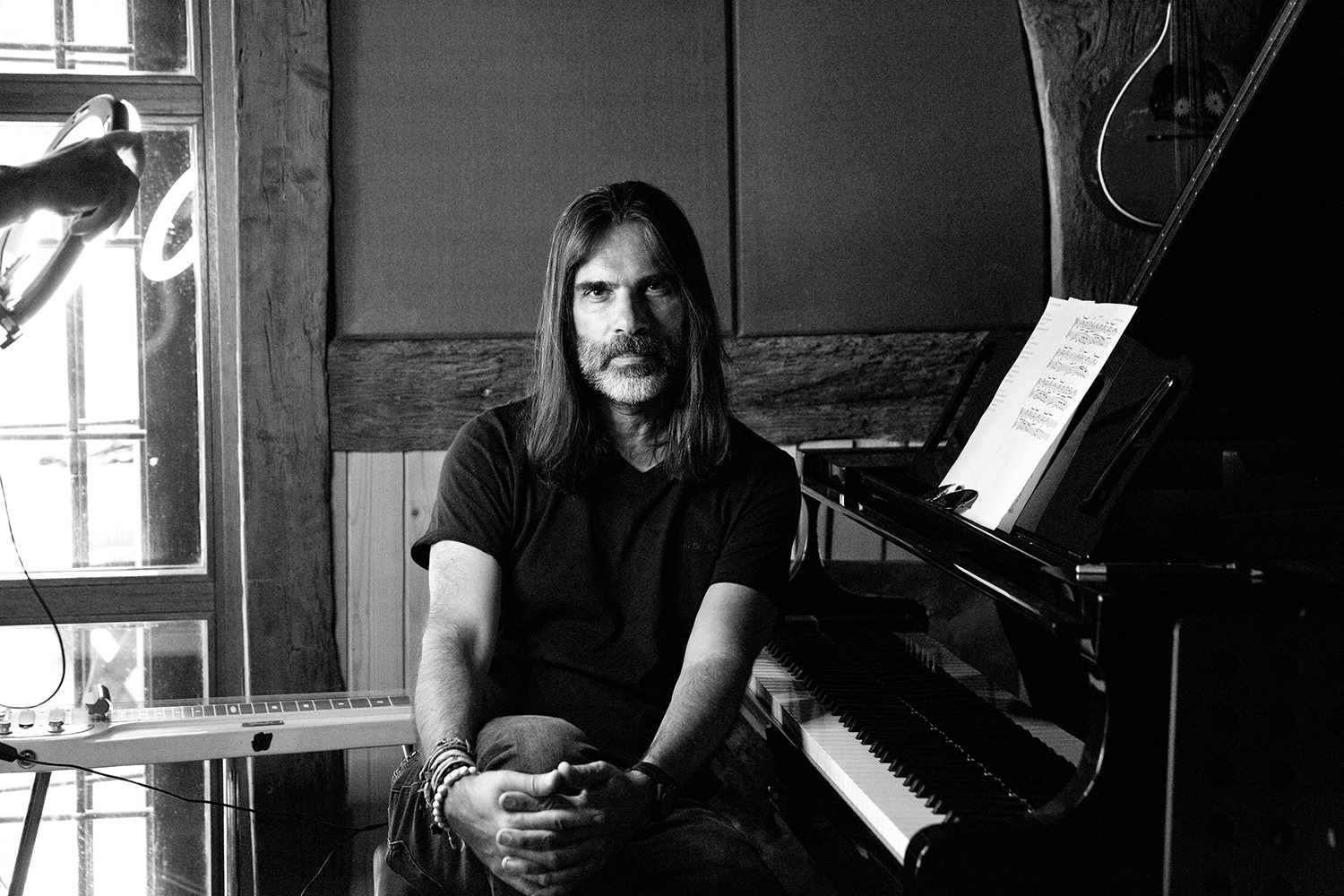
How has Lebanon influenced your music and the way you see your work today?
I grew up in a place where beauty and violence coexist, where East and West constantly collide. In a hostile environment, a living organism either evolves or disappears. That’s where I learned that survival is a form of creativity and that harmony is not balance, but tension held together. This lies at the core of my music. In the midst of tension between sounds that collide, harmonies that rub against each other and instruments from different cultures that shape my life, I try to find a
sense of order within the chaos, and turn friction into emotion.
What do you miss most about Lebanon when you’re away from it?
The immediacy. Things happen without mediation emotions, conversations, music, conflict. There’s a rawness in daily life that you don’t find elsewhere. I miss the light, the sea, and that feeling that time is elastic, never fully disciplined. I also miss my house, my farm studio in the middle of the forest in Batroun, a place where nature
and creation breathe together. And maybe most of all, I miss that feeling that every day in Lebanon is a historic one. I never get bored there.
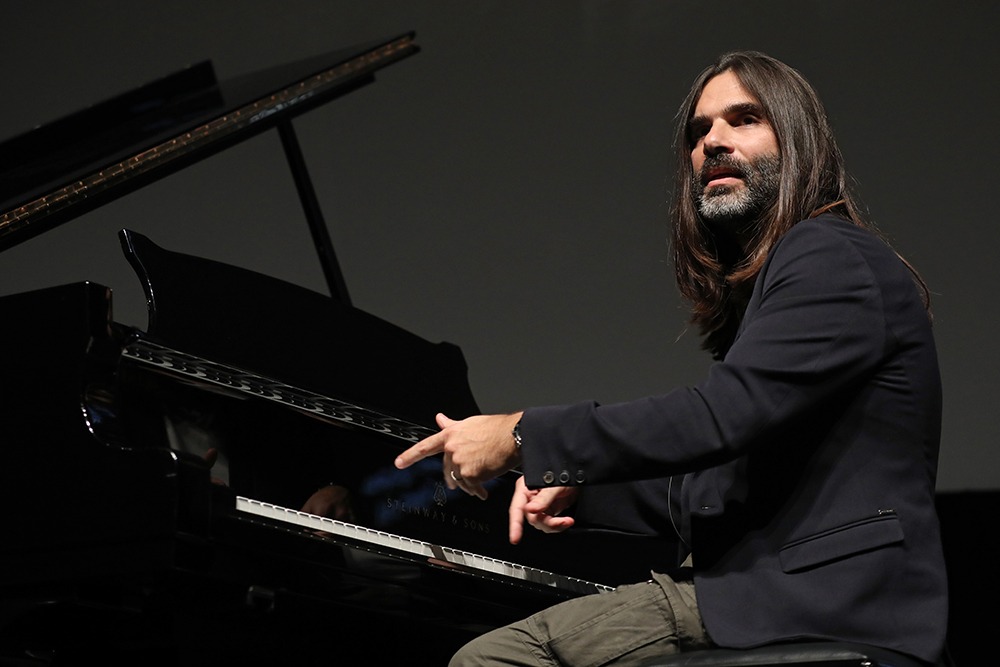
When you’re not working on music, where or how do you like to disconnect and recharge?
Through silence more than distraction. Most of all, I recharge at my farmhouse in the forest. Spending hours among the trees, living a simple Mediterranean life, harvesting olives, making wine and cheese. Reading under a pine tree feels like a time machine back to my childhood. That’s where I truly reset.
How do you usually start composing a new piece?
Often through accidents. I believe music passes through me, I’m just a medium, and that my conscious intervention comes later, through harmony and orchestration.
With film, I prefer to work from the script before the images. Words give my imagination more freedom than pictures.
Is there a project you feel especially proud of?
I feel proud of projects where music is not ornamental but necessary, films where the score carries what words cannot. I’m proud when music becomes almost invisible, when it feels inevitable rather than noticeable.
In a way, every film I’ve worked on represents a chapter of my life. I look back at them with the nostalgia of someone revisiting their past. Sometimes I think I could have done things differently. But that’s also what makes them alive: some melodies stay with you, others fade, just like memories.
I’m also proud that this music has found a second life beyond the films. When it’s played by classical orchestras around the world, it feels like the story continues in another language.
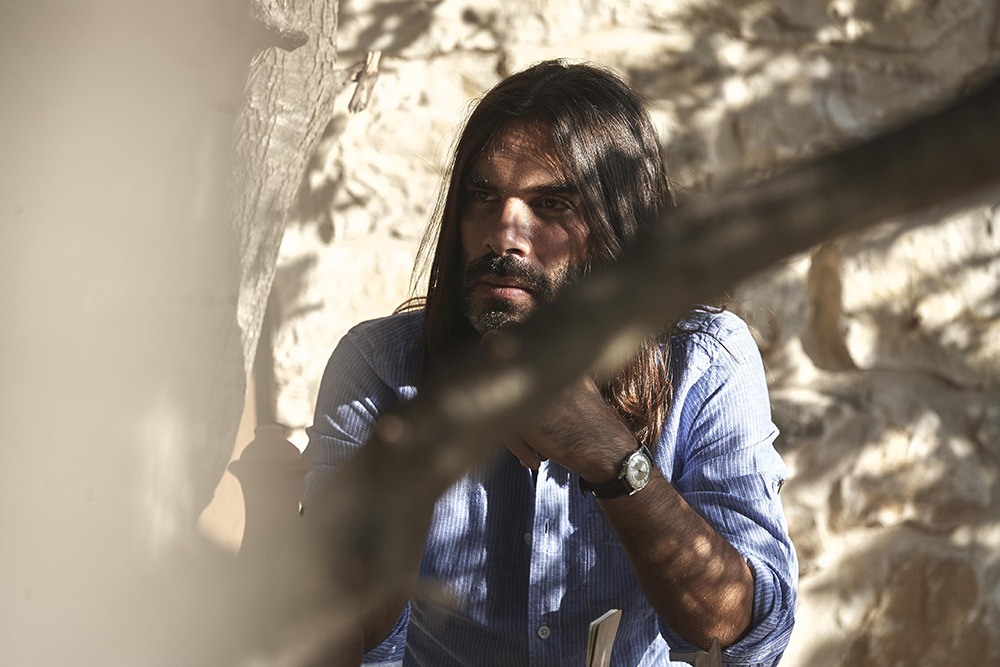
Are there sounds or musical traditions you always find yourself returning to?
The voice, first of all. And rhythms that breathe, not rigid meters. I often return to modal worlds, to tango, to Arabic melodic sensibilities, but always filtered through my own language. I’m less interested in tradition as preservation than in transformation. In a way, my body has absorbed these traditions. South American influences came through my mother, who once lived in Mexico. Classical music came through my training. And oriental sounds came from the streets of my childhood. All of that lives in me not as references, but as instincts.
What advice would you give young musicians from the region today?
Don’t try to represent anything. You don’t owe identity to anyone. Be precise, be demanding and protect your inner silence. The world is loud and depth comes from restraint. At the same time, learn the rules of music. Learn how to read, how to master an instrument. Seek out the masters of the craft because music is a craft, and it is passed on through masters. Freedom only becomes meaningful when it rests on discipline.
What are you curious about exploring next in your music?
Time. Slowness. Music that almost disappears, fewer notes, longer breaths. I’m also curious about working with artists I deeply admire, and about going further inward, breaking through the filters of self-consciousness to reach something more instinctive and true. To find my inner Grail before it’s too late, before the source inside me runs dry.
If you enjoyed reading this, check out our interview with Lebanese singer Tania Kassis.
Loading