



In Lebanon, Eid El Barbara is a longstanding tradition. It is all about good food and fun-filled memories: kids wear disguises and roam their neighborhoods looking for treats. And no it’s not Halloween!
The Lebanese celebrate Eid el Barbara, the Feast of Barbara, on the eve of December 4 in commemoration of her martyrdom. Saint Barbara, whose name means barbarian woman, is believed to have lived at around 300 AD. According to local legend, she was a young Roman girl who lived in the Bekaa region.
The legend has it that Barbara was the daughter of a rich pagan named Dioscorus, who kept her in a tower to shelter her from the outside world. But, to his dismay, she embraced the Christian religion. After hearing his daughter’s confession, he drew his sword to kill her. Yet, miraculously, an opening appeared in the tower wall, and she was transported to a mountain gorge. The story continues that she converted to Christianity and, to elude her father, she disguised herself when she escaped from the tower. Thus, the tradition of dressing up was created.
While fleeing persecution, Barbara supposedly ran through a freshly planted wheat field, which magically grew instantly to cover her path and hide her. But the soldiers eventually captured her, and beheaded her at the request of her father.
Saint Barbara, a Virgin Martyr, is the patron saint of firefighters, soldiers and all those who have dangerous professions. She died by the sword, but her killers were struck down by lightning, so she is often called on for protection from lightning and from violent and unpredictable death. She is one of the “Fourteen Holy Helpers,” a group of saints venerated together in Roman Catholicism. But, because of doubts about the historical accuracy of this story, Saint Barbara was removed from the Catholic liturgical calendar in 1969. However, like Saint Christopher and Saint Expedite, who were similarly “de-sainted” at the same time, her popularity continues unabated.
The iconography of Saint Barbara generally shows her dressed in white and red. The sky is often dark and foggy, with jagged flashes of lightning above. Often the tower, in which she was kept captive, is depicted in the background. In some images, she holds a small model of a tower in her hands or wears a crown that mimics the crenelated top of a stone fortress-tower.
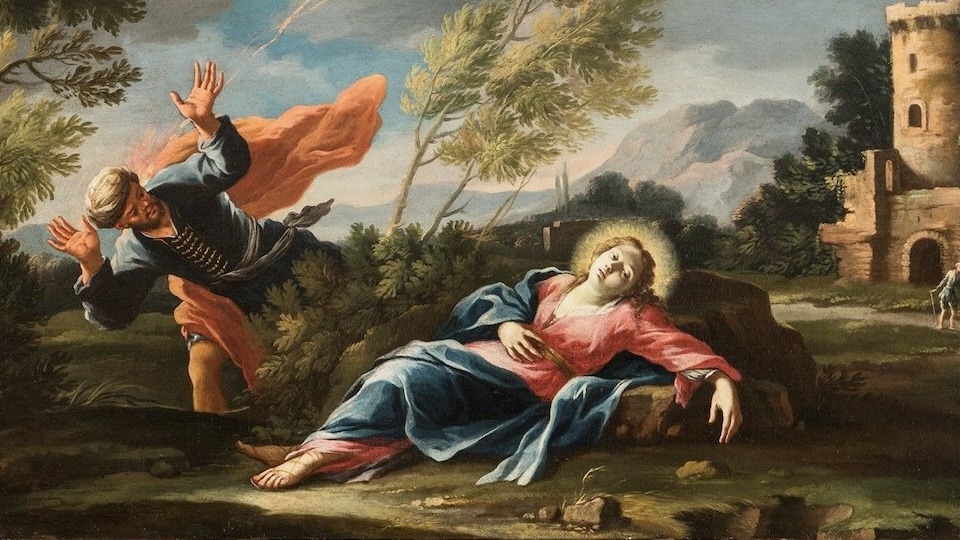
In addition to the tower, images associated with Saint Barbara include the sword with which she was beheaded, a chalice, the palm branch of her martyrdom and the lilies of virginity. A little plant bearing white daisy-like flowers, either Feverfew or Life Everlasting, often blooms at her feet.
A local tradition on this day is to plant wheat seeds (or chick peas, barley grains, beans, lentils, etc.) on a bed of cotton wool. The seeds germinate and grow to six inches in time for Christmas, when the shoots are used to decorate the nativity scene, usually placed below the Christmas tree to recreate one of Barbara’s miracles.
Kids, when roaming the neighborhood, scream: “hesuhlee ya Barbara,” imploring Barbara to run away. Replicating her escape, children of all ages change their appearance, dress up and put on masks. Then, they meet up with their friends and go around the neighborhood collecting treats that vary from chocolate to money.
But treats are not free. The kids pay for them by singing a song or by dancing accompanied by tambourines and derbake (a type of hand drum). There is also a special song for the occasion with many variations depending on the situation. If, after the performance, the host gives the kids a good treat, they reward them with song that ends with a compliment. If not, the song ends with an innocent insult, which results in kids running away as quickly as they can.
Even school activities revolve around Eid El Barbara, as kids draw, cut and decorate their own cardboard masks. Upon returning home, many proudly wear their mask and surprise their parents. In the old days, parents used whatever was handy to dress up their children and kids were so happy to wear their mother’s dresses and father’s jackets.
Like any joyous occasion, Eid el Barbara is also about food. According to Barbara’s story, she hid in wheat fields, which is why a special wheat dessert is prepared. Boiled barley is flavored with orange blossom water and served with almonds, pistachios, raisins, walnuts, pine kernels and sweetened with either sugar or honey.
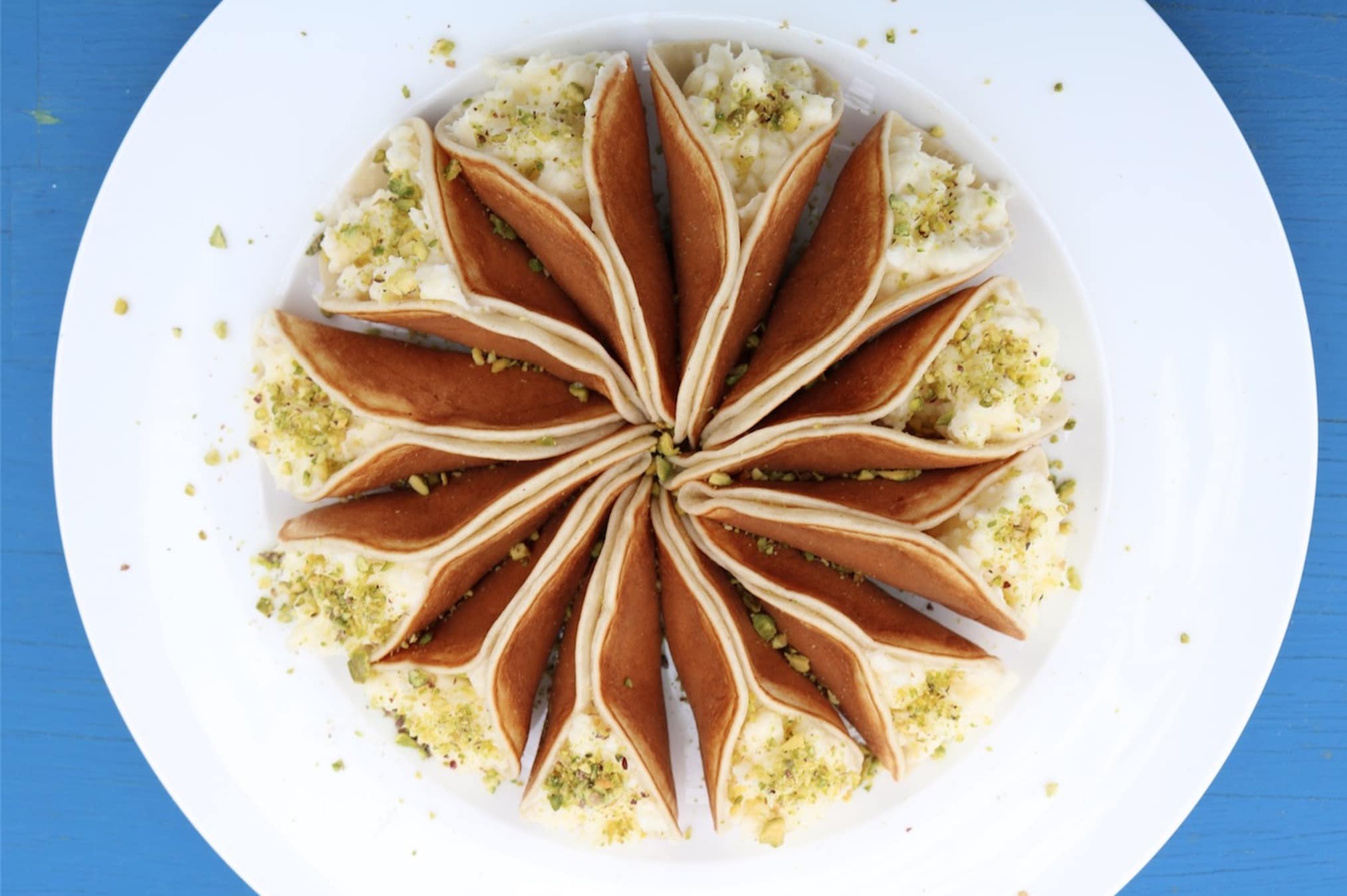
Other traditional desserts include maacroons and aawamat, which are basically two different versions of fried dough soaked in sugar syrup and qatayef, a sweet dough, like a crepe, filled with either ashta (cream) or a mixture of crushed walnuts with sugar and orange blossom water with a drizzle of sugar syrup. A high-calorie feast indeed!
——————————————————————————————————————————————————————————-
If you enjoyed reading this, check out our article on our favorite Eid El Barbara desserts in Lebanon.
Loading